Table of contents
- LangChain vs LlamaIndex — Quick Summary
- Introduction
- Why Most Production LLM Applications Fail
- What Is LangChain? (LLM Orchestration Framework)
- What Is LlamaIndex? (RAG & Data Framework)
- Architectural Differences for Production LLM Applications
- LangChain vs LlamaIndex: Detailed Feature Comparison
- Real-World Use Cases
- Can You Combine LangChain and LlamaIndex?
- Common Mistakes in Framework Selection
- Decision Guide: Which Framework Should You Choose?
- RAG vs Fine-Tuning: An Important Architectural Decision
- Commonly Asked Questions
- Final Verdict: LangChain or LlamaIndex?
LangChain vs LlamaIndex: Which One Should You Choose for Building Real-World LLM Applications?
LangChain vs LlamaIndex — Quick Summary
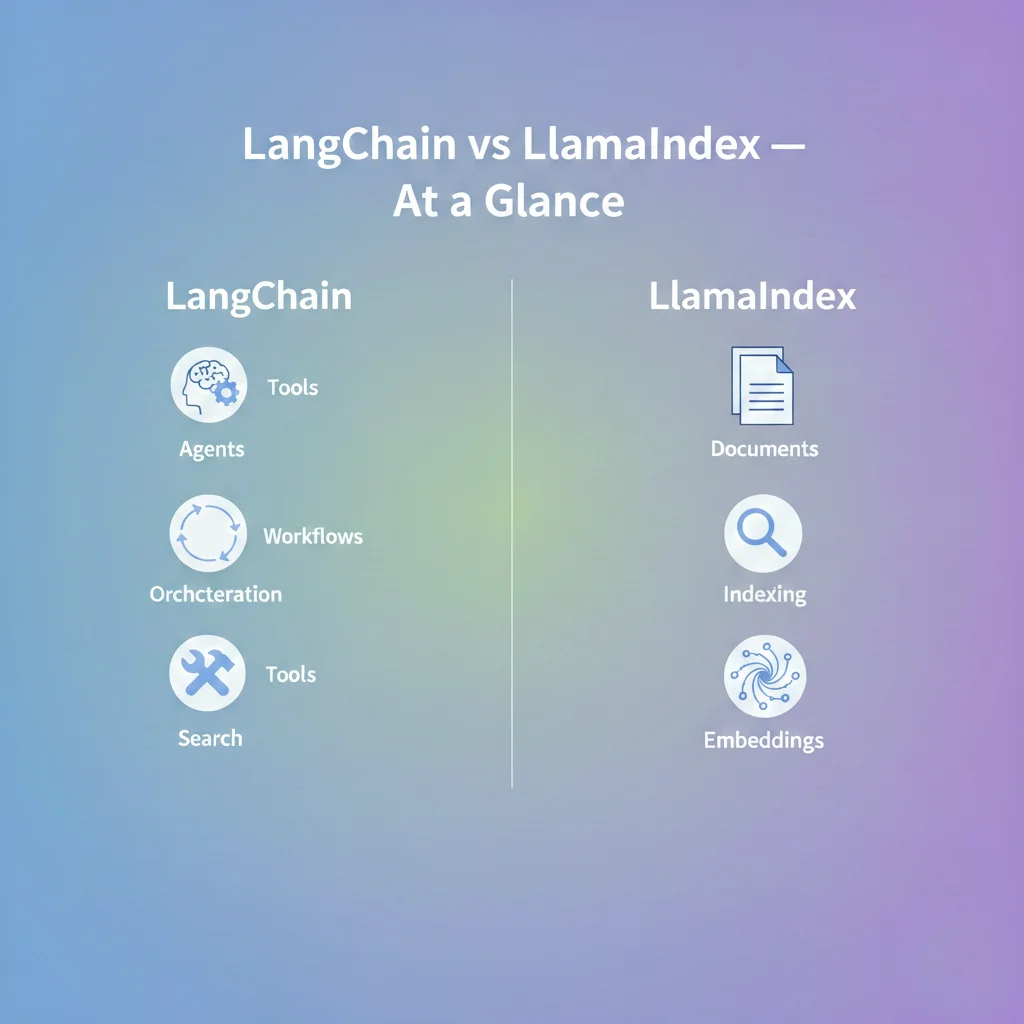
- LangChain is an LLM orchestration framework designed for multi-step reasoning, the combination of multiple agents (AI), and working with integrated tools.Workflows.
- The LlamaIndex is a data indexing and retrieval framework that maximises performance in RAG (retrieval-augmented generation) systems.
- Choose LangChain as your framework when you want to create AI applications with multiple agents that require a complex workflow.
- Choose LlamaIndex when you are developing an application that relies on documents and retrieval.
- Most deployed LLM architectures leverage both frameworks.
Introduction
The right orchestration framework when working with these new AI systems powered by LLMs is critical for successful project implementation. Popular frameworks for working with LLMs include LangChain and LlamaIndex, each of which allows an AI developer to connect language models to data in the external world, such as vector databases or APIs of enterprise systems.
Ultimately, LangChain and LlamaIndex are both widely used frameworks for building applications using LLMs, but they are architecturally different and the wrong choice could lead to scalability problems, ineffective retrieval issues, or agent workflow complexity.
For those pursuing an AI Course, before implementing an LLM based application, knowing the practical differences between LangChain and LlamaIndex is crucial in the design of an AI system built for production use.
This guide will offer a detailed examination of both frameworks from an implementation point-of-view to enable selection of the optimal framework for building your AI architecture.
Why Most Production LLM Applications Fail
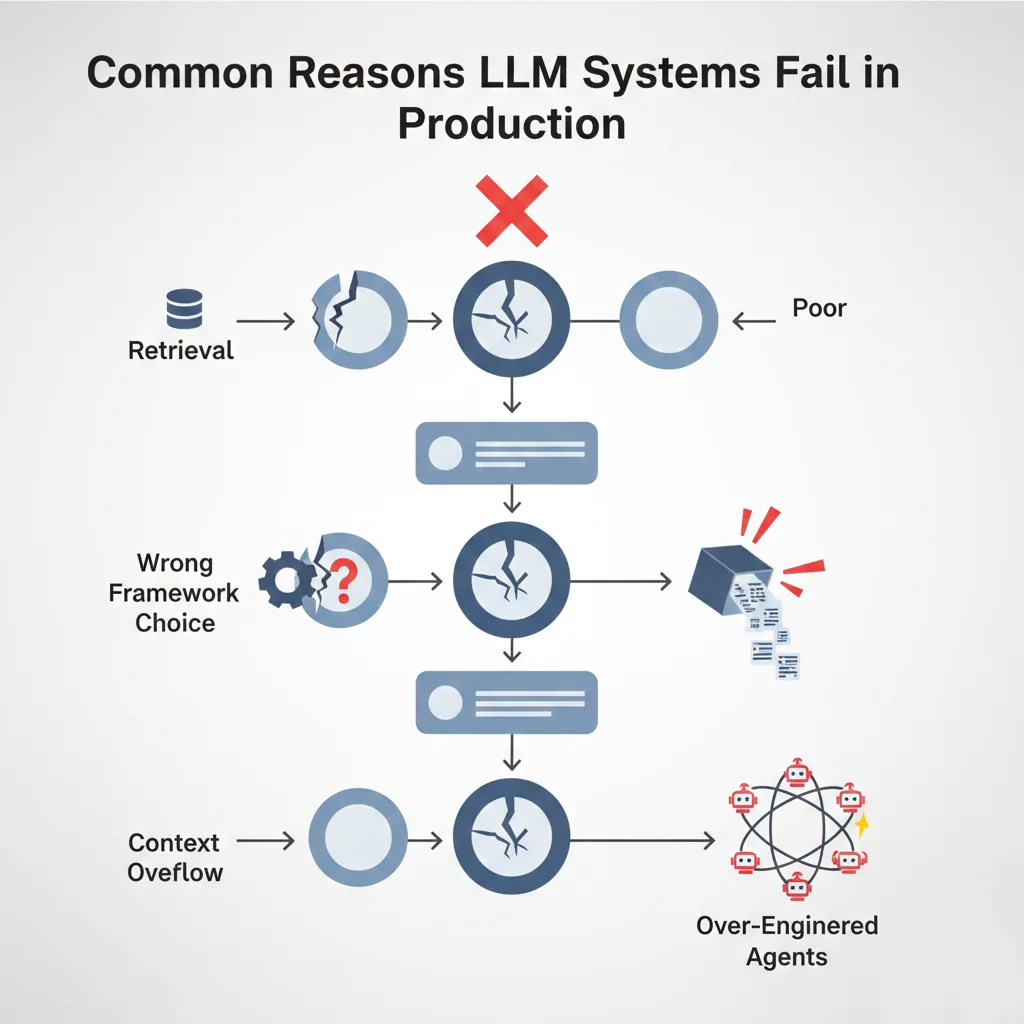
Before comparing tools, you should first comprehend the reasons behind many production LLM architectures failing.
- Choosing the wrong framework
- Inadequate Retrieval-Augmented Generation (RAG)
- Retrieving Systems Using Embeddings that are Not Appropriately Engineered
- Mismanaged context window
- Overly Engineered Agent-Based Pipelines
Most of the time, developers choose a tool based on its popularity instead of architectural suitability. Decisions regarding an appropriate LLM architecture should be made in accordance with the system’s orchestration vs. retrieval requirements.
What Is LangChain? (LLM Orchestration Framework)

LangChain, a framework for orchestrating application interactions, is intended for developers who want to develop multi-step AI demonstrations via workflow orchestration.
Core Philosophy
The core principle of LangChain is to provide LLMs with the means to integrate into working environments through workflow orchestration—connecting LLMs with different tools, APIs, memory systems, etc., to create chains, agents, and tools to be executed in an orchestration fashion.
Main Components
- Chains – sequential workflows of an LLM
- Agents – a sophisticated decision-making tool
- Tools – integration with APIs/functions
- Memory – remember all actions taken together throughout the lifecycle of the agent
Where You Can Utilize LangChain's Full Potential
LangChain has the most potential when developing:
- AI agents
- Automated systems for executing workflows
- Chains of reasoning that take multiple steps to reach a conclusion
- AI assistants that use tools
- Entirely autonomous LLM applications
In summary, LangChain has the potential to create sophisticated agent-based AIs as well as implementing complex orchestration logic.
What Is LlamaIndex? (RAG & Data Framework)
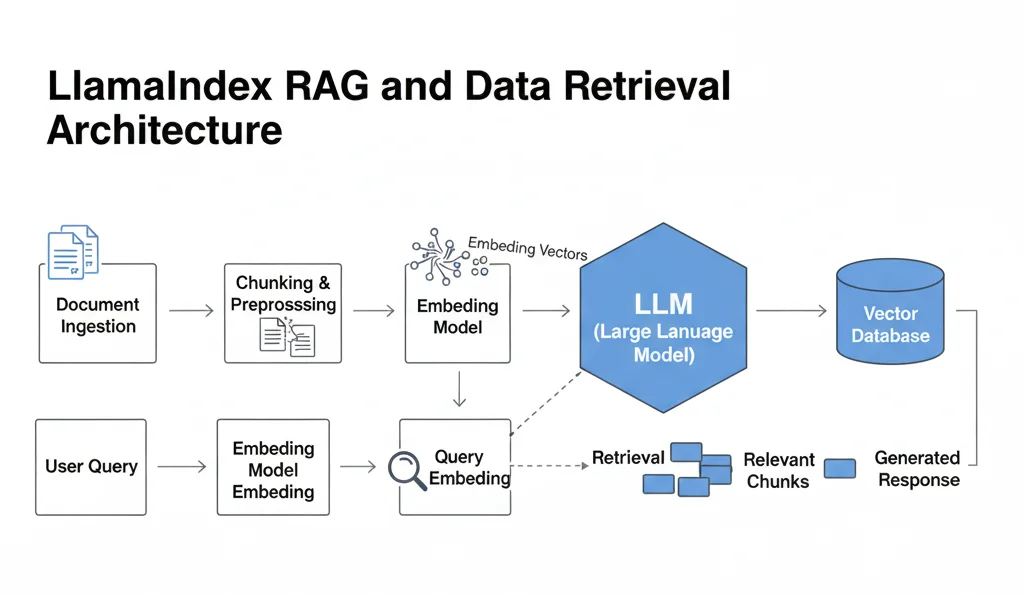
The LlamaIndex, previously referred to as GPT Index, is a data framework specifically built for retrieval-augmented generation(RAG) systems.
Core Philosophy
LlamaIndex’s main purpose is to create links between LLMs and external data repositories efficiently with its core competency being indexing, organizing and retrieving external data to improve the responses from the model.
The key capabilities of LlamaIndex are:
- Indexing of documents
- Access (connectors) of data
- Search engine for querying data
- Optimized retrieval pipelines
- Vector database support
LlamaIndex is well suited for the following RAG use cases:
- Knowledge base (assistance) applications
- Q & A systems based on documents
- Enterprise search for data
- RAG-based applications
- AI systems that require contextual awareness
Architectural Differences for Production LLM Applications
Difference between Workflow Orchestration and Data Orchestration
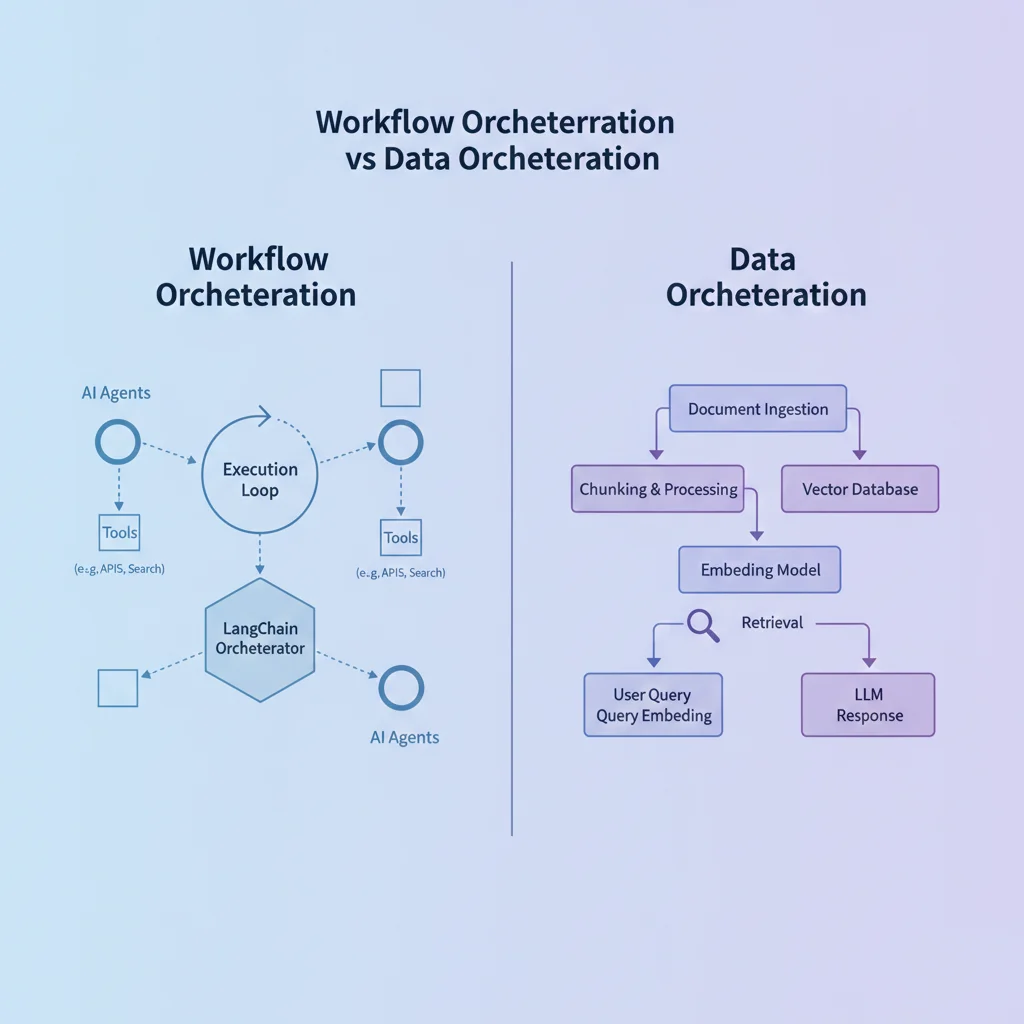
- LangChain is designed for performing workflows using reasoning and executing agents.
- LlamaIndex’s focus is on optimizing how you retrieve data and create indices.
- LangChain focuses on building intelligent workflows.
- LlamaIndex focuses on helping you gain intelligence by accessing your data.
Agent Framework Support
- LangChain incorporates agent frameworks natively, including loops for calling tools from an agent execution context.
- LlamaIndex does not focus on agent orchestration support.
LangChain has better support for building autonomous AI systems.
RAG Frameworks Compared
When it comes to different ways of implementing RAG:
- The LlamaIndex RAG framework is built specifically for RAG and has optimized abstractions.
- LangChain’s RAG framework can be configured flexibly but is completely manual.
If your system requires extensive access to documents, you will find the patterns in LlamaIndex’s RAG framework to be more straightforward and clear.
LangChain vs LlamaIndex: Detailed Feature Comparison
| Feature | LangChain | LlamaIndex |
| Explanation | LLM application frameworks | Indexes and retrieves documents |
| Core Strengths | Complex workflows | Processes complex RAG pipelines optimally |
| Best Use Cases | AI agents/reasoning workflows | Utilize RAG-based systems that are document-heavy |
| Learning Curve | Moderate to high level (complex workflow) | Easy (RAG-based builds) |
| RAG Integration | Supports integration of RAG customization | Designed for RAG use |
| Agent Functionalities | Strong functionality/agent mechanisms | Weak functionality/agent mechanisms |
| Vector Database Compatible | Yes | YES (also optimized for document ingestion) |
| Memory Support | Conversational/Abstract Memory | Multiple Document Memory |
| Scalability | Multiple agent environment | Multiple document environment |
| Production Use Cases (EXAMPLES) | AI Copilot & Automated Task | Knowledge Assistants |
Real-World Use Cases
Where LangChain Wins
- AI copilots
- Multi-step research systems
- Tool-using AI agents
- Workflow automation platforms
Where LlamaIndex Wins
- Enterprise knowledge search
- Internal document assistants
- FAQ bots
- Legal or research document analysis
Can You Combine LangChain and LlamaIndex?

Yes — and many enterprise AI systems do.
Common Hybrid Architecture Pattern
- LlamaIndex handles data ingestion and retrieval.
- LangChain handles reasoning, orchestration, and tool execution.
Common Mistakes in Framework Selection
- Unhelpfully using LangChain in simple RAG systems.
- Unintentionally using LlamaIndex for agent reasoning.
- Disregarding production scalability from the start.
- Over complicating architecture before validating the quality of retrieval.
Decision Guide: Which Framework Should You Choose?
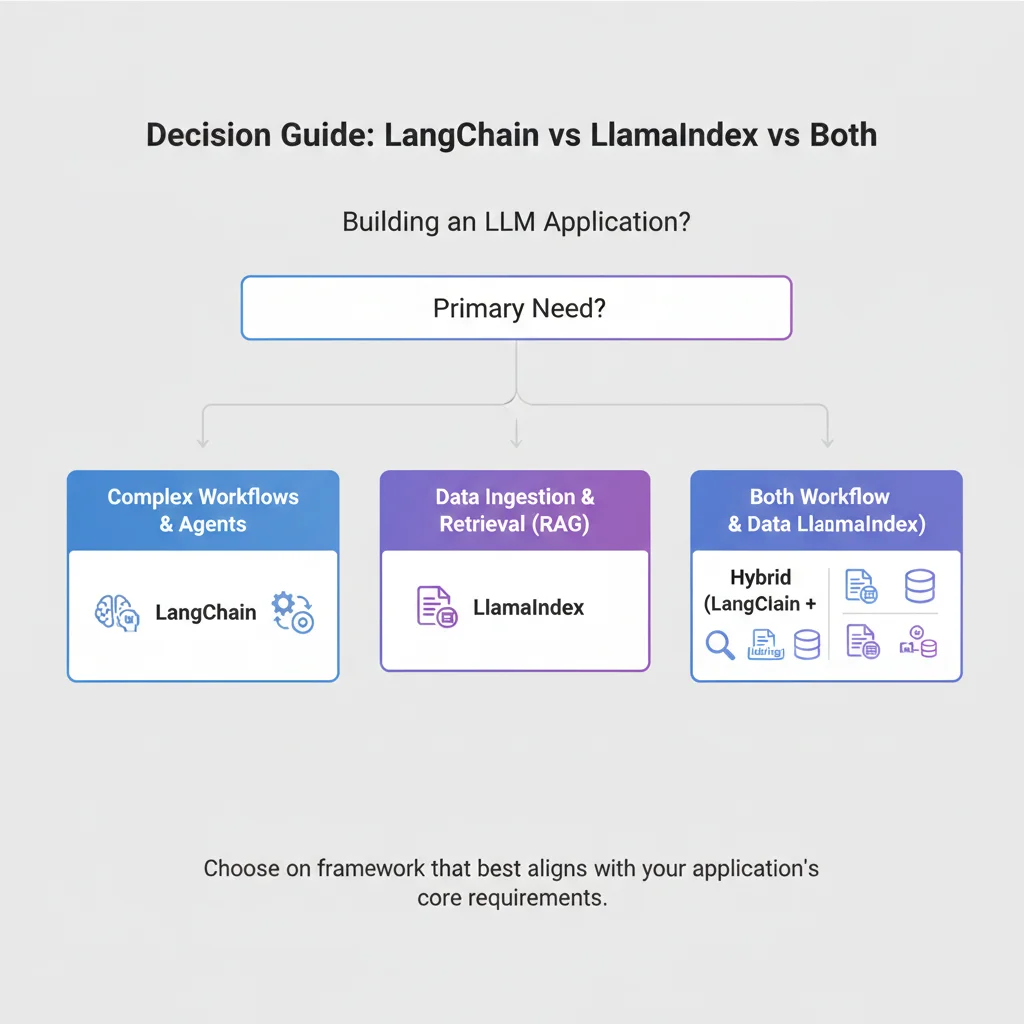
Choose LangChain if:
- You’re building AI Agents
- You need to integrate tools into your application
- You need multi-step reasoning in your application
- You want to control the orchestration of the system to manage workflows effectively.
Choose LlamaIndex if:
- You are developing document heavy applications
- You want to build retrievable RAG pipelines
- Retrieval quality is very important to you.
Choose Both if:
- You need scalable RAG functionality (ie. you want it to work at all scales) and intelligent workflows
- You are building enterprise-level AI Solutions.
RAG vs Fine-Tuning: An Important Architectural Decision
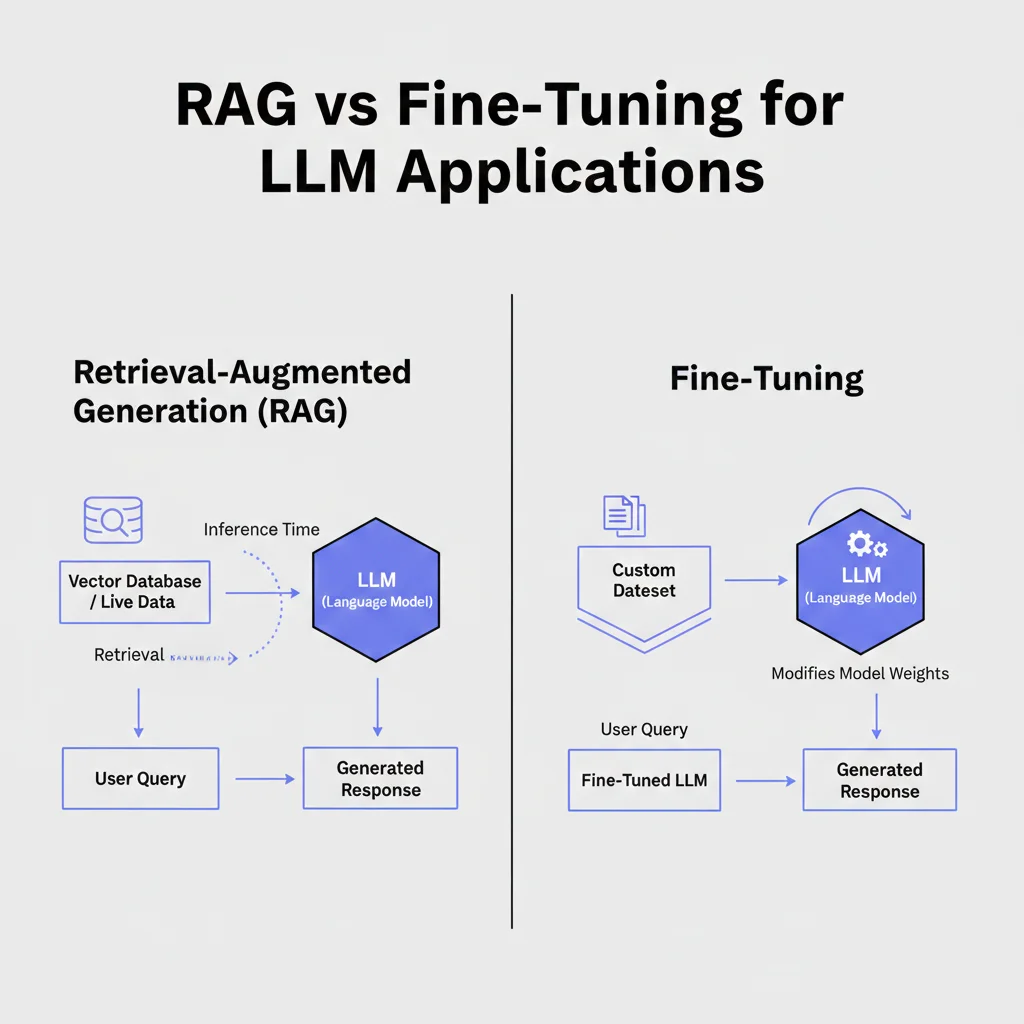
As part of your overall architectural decision-making process when deciding whether to utilize LangChain or LlamaIndex, one of the primary options is whether to use Retrieval-Augmented Generation (RAG) or Fine-Tuning.
RAG retrieves data dynamically at the moment of inference, while fine-tuning alters model weights. If you are looking for a detailed breakdown of the strategic decision between RAG versus Fine-Tuning, please review our in-depth comparison of RAG and Fine-Tuning where we compare when retrieval-based systems are more effective than training-based systems.
Commonly Asked Questions
LangChain is more focused on agent-based AI and workflow heavy apps, while LlamaIndex is better designed for RAG oriented retrieval systems. Your choice will depend on what you want to accomplish architecturally with your LLM.
LlamaIndex was built from the ground up to be the optimal framework for building RAG systems, therefore it has an efficient indexing and retrieval pipeline to support RAG. LangChain can also provide RAG capabilities, but may require additional configuration.
Final Verdict: LangChain or LlamaIndex?
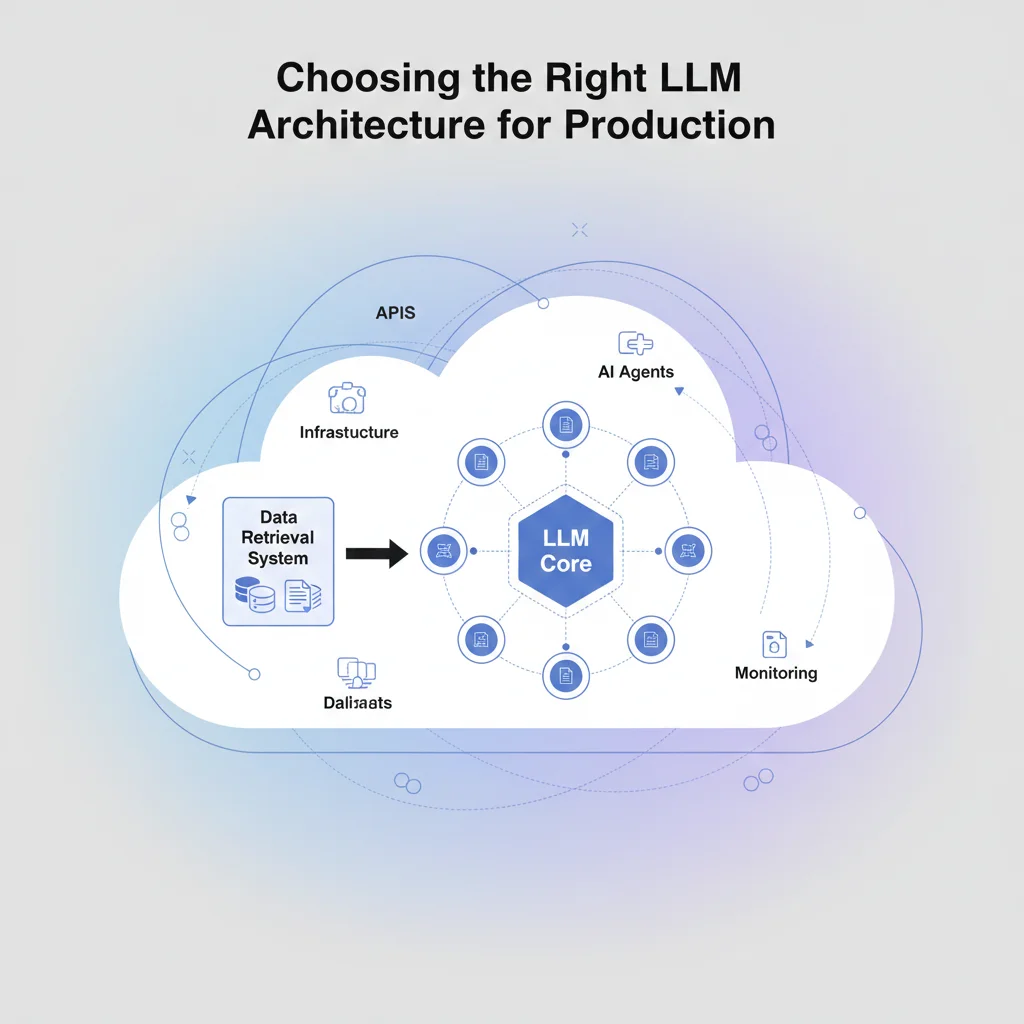
There is no one winner in this competition.
LangChain was designed so that you can create smart workflow-centric AI applications, while LlamaIndex was built to provide enhanced and complete search-based vs document-based AI applications.
The best AI teams do not determine which framework is the best; they determine which architecture will solve your problem.
By knowing both frameworks and how to incorporate them together will be substantially valuable in developing production-scale, scalable LLM-based applications.