Proleed’s Artificial Intelligence Training Course is a master program that builds AI expertise through hands-on projects, empowering you to excel in the world of innovation.
Join Free Live Class
Thank You!
Your message has been received.
We will respond back to you as soon as possible.
Average Salary of AI Developer
$103,889 per annum
Future of AI Career
78 million jobs globally by 2030
Proleed's Premium Learning Model helps us achieve 100% Placement Record
Join the League of 30k+ Participants Across 18 Countries Trained by Proleed
Most Advanced Artificial Intelligence (AI) Training Course That Cover All In-demand Tools & Technologies
Don’t Just Take Our Words for it
Check What Our Students are Saying
Proleed's Artificial Intelligence Training Course helped me successfully shift my career into AI. It combines AI, Machine Learning, Deep Learning, Agentic AI and Generative AI in one complete program. The mentors and practical projects made learning practical and engaging. Now I apply these skills confidently in my role.
Noor Ali
Jonathan Brooks
Next Review
As a student studying for my graduation in Artificial Intelligence, Proleed's Artificial Intelligence Master Program provided me with the practical exposure I was looking for. Their mix of Machine Learning, Deep Learning, Agentic AI and Generative AI was especially valuable to me in terms of understanding how the concepts are implemented in real-life practical scenarios within the world. Their practical projects and experience proven mentor increased my practical knowledge. Their course has truly set me up for my future career in AI.
Jonathan Brooks
Mila Novakova
Next Review
When I found Proleed's Artificial Intelligence Training, I was surprised at the unmatched and well structured syllabus. It includes AI, Machine Learning, Deep Learning, Agentic AI and Generative AI, explained in a comprehensive manner but still easy to follow. Their practical learning method and with real life projects in the world made the experience overall, extremely valuable. I am glad I studied with Proleed to build up my AI skills and career.
Mila Novakova
Noor Ali
Next Review
Artificial Intelligence (AI) Training Course Curriculum
Definition and Scope of AI
History and Evolution of AI
Applications of AI in Real Life
Types of AI: Narrow, General, Super
Weak AI vs Strong AI
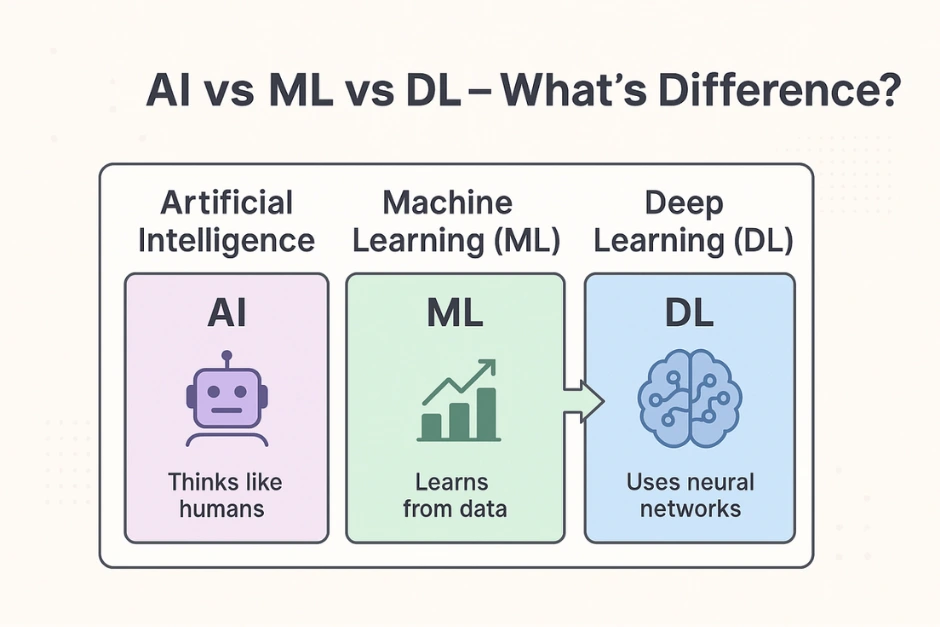
AI vs Machine Learning vs Deep Learning
Symbolic AI and Classical Approaches
Intelligent Agents
Turing Test and Rational Agents
Ethics and Social Implications of AI
Introduction to Python Programming
Data Types, Variables, and Operators
Control Structures and Loops
Functions and Lambda Expressions
Lists, Tuples, Dictionaries, Sets
File Handling in Python
Exception Handling
Modules and Packages
Object Oriented Programming
Introduction to Virtual Environments
Introduction to NumPy and Its Importance
Creating and Working with ndarrays
Array Indexing, Slicing, and Iteration
Array Operations
Mathematical and Statistical Functions
Reshaping, Stacking, and Splitting Arrays
Linear Algebra Operations (Dot Product, Matrix Inversion, Determinants)
Random Module – Generating Random Numbers
Vectorization for Performance Optimization
Real-world Examples: Image Representation, Computation Tasks
Introduction to Pandas: Series and DataFrames
Importing and Exporting Data (CSV, Excel, JSON)
Indexing, Slicing, and Subsetting Data
Data Cleaning: Handling Missing Values, Duplicates, Outliers
Data Transformation: Apply, Map, Lambda Functions
Filtering and Conditional Selection
Merging, Joining, and Concatenating DataFrames
Grouping and Aggregation (GroupBy)
Pivot Tables and Crosstabs
Time Series Handling
Basic Descriptive Statistics and EDA
Introduction to Data Visualization and Matplotlib
Basic Plots: Line, Bar, Scatter, Histogram, Pie
Customizing Plots: Titles, Labels, Legends, Colors, Styles
Multiple Plots and Subplots
Working with Figures and Axes Objects
Annotations and Texts
Plot Styling and Themes
Saving Figures in Various Formats
3D Plotting (Optional: mpl_toolkits)
Integrating Matplotlib with NumPy and Pandas
Understanding Structured and Unstructured Data
Data Collection Methods
Data Cleaning and Imputation
Feature Engineering
Feature Scaling (Normalization, Standardization)
Handling Missing and Outlier Values
Encoding Categorical Variables
Data Splitting: Train/Test/Validation
Data Visualization for EDA
Data Pipelines and Automation
Machine Learning Introduction
Feature Extraction
Fine Tuning Hyperparameters
Semi-Supervised
Gradient descent
Overfitting and Underfitting
Learning Curves and Model Diagnostics
Regression
GoogleColab
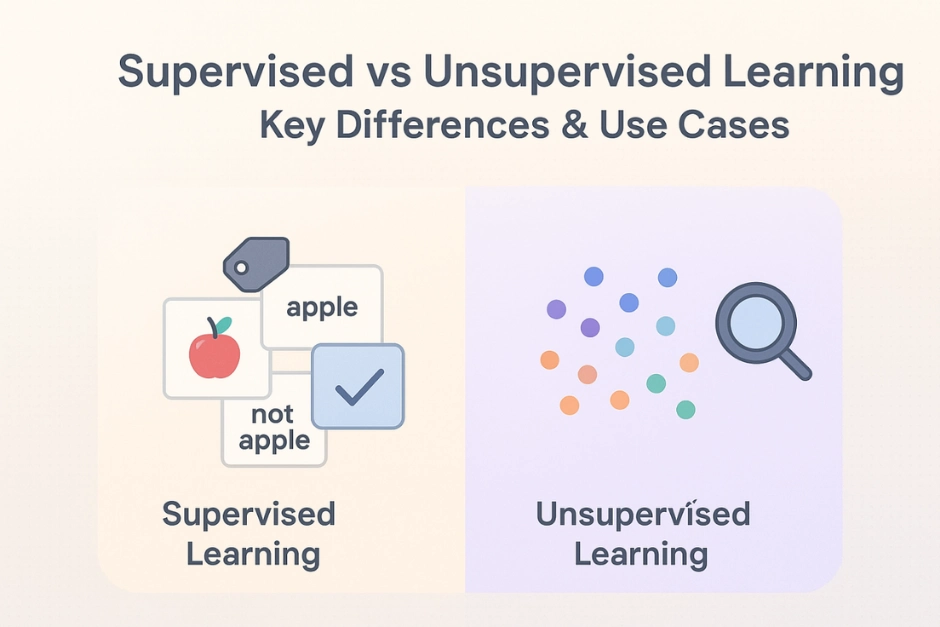
Introduction to Supervised Learning
Linear Regression
Logistic Regression
Decision Trees
Support Vector Machines (SVM)
K-Nearest Neighbors (KNN)
Naive Bayes Classifier
Random Forests
Gradient Boosting Machines (XGBoost, LightGBM)
Introduction to Unsupervised Learning
K-Means Clustering
Hierarchical Clustering
DBSCAN
Principal Component Analysis (PCA)
t-SNE for Dimensionality Reduction
Anomaly Detection
Association Rule Mining
Recommendation Systems
Evaluation of Clustering
Basics of RL and Agents
Environment and Reward System
Markov Decision Process (MDP)
Q-Learning
Deep Q-Networks (DQN)
Policy Gradient Methods
Actor-Critic Models
Exploration vs Exploitation
OpenAI Gym Environments
Real-life Applications of RL
Introduction to Scikit-learn and Its Core Components
Data Preparation and Preprocessing
Building Supervised Learning Models
Implementing Unsupervised Learning Techniques
Evaluating Model Performance
Improving Models with Validation and Tuning
Automating Workflows with Pipelines
Saving and Loading Models for Reuse
Hands-on Mini Projects
Introduction to Deep Learning
Difference between Machine Learning and Deep Learning
Biological Inspiration: Neurons and the Human Brain
Artificial Neural Networks (ANNs)
Structure of a Neural Network (Input, Hidden, Output Layers)
Activation Functions (Sigmoid, ReLU, Tanh, Softmax)
Forward Propagation and Backpropagation
Loss Functions and Optimization
Gradient Descent and Learning Rate
Overfitting, Underfitting, and Regularization Techniques
Building Neural Networks from Scratch (NumPy)
Introduction to Deep Learning Frameworks (TensorFlow & PyTorch)
Creating and Training Models in TensorFlow
Creating and Training Models in PyTorch
Hyperparameter Tuning
Model Evaluation and Metrics
Saving and Loading Models
Batch Normalization and Dropout
Early Stopping and Callbacks
Practical Implementation on Simple Datasets
Introduction to TensorFlow Ecosystem
Tensors, Variables, and Operations
Building Neural Networks with Keras API
Model Compilation, Training, and Evaluation
Callbacks (EarlyStopping, ModelCheckpoint)
TensorBoard for Visualization
Implementing CNNs, RNNs, and Transfer Learning
Hyperparameter Tuning (KerasTuner)
Saving & Loading Models (SavedModel, H5)
Hands-on Projects using TensorFlow
Introduction to PyTorch Framework
Tensors, Autograd, and Computational Graph
Building Neural Networks using nn.Module
Optimizers and Loss Functions
Training Loops and Backpropagation
GPU Acceleration (CUDA)
Implementing CNNs, RNNs, and Transformers
Using torchvision and torchtext
Model Saving, Loading, and Evaluation
Real-World Projects with PyTorch
Introduction to CV and Image Processing
Image Representation and Color Models
Image Filtering and Edge Detection
Object Detection (Haar, HOG)
CNNs for Image Classification
Image Augmentation Techniques
Face Detection and Recognition
Transfer Learning with CNNs
Image Segmentation
OCR (Optical Character Recognition)
Convolutional Neural Networks (CNNs) – Theory and Architecture
Applications of CNNs (Image Classification, Object Detection)
Recurrent Neural Networks (RNNs)
Long Short-Term Memory (LSTM) and GRU Networks
Autoencoders and Variational Autoencoders (VAEs)
Generative Adversarial Networks (GANs)
Transfer Learning and Pretrained Models
Attention Mechanism
Transformers Overview
Practical Implementation with Real-World Use Cases
Introduction to NLP
NLP Pipeline and Text Preprocessing
Tokenization, Stopwords Removal, Stemming, and Lemmatization
Bag of Words and TF-IDF
Word Embeddings (Word2Vec, GloVe, FastText)
Part-of-Speech (PoS) Tagging and Named Entity Recognition (NER)
Language Models and Probability-Based NLP
Text Classification and Sentiment Analysis
Sequence-to-Sequence Models
Evaluation Metrics in NLP
Introduction to BERT
Introduction to GPT Models
Hugging Face NLP Pipelines
Modern Tokenization: BPE, WordPiece, SentencePiece
NLP Evaluation Metrics
Embedding Layers in Deep Learning
RNNs, LSTMs, and GRUs for Text Data
Encoder-Decoder Architecture
Attention Mechanism in NLP
Transformer Models (BERT, GPT, T5)
Fine-tuning Pretrained Models for NLP Tasks
Text Generation and Summarization
Machine Translation
Chatbot and Question-Answering Systems
Gradient Descent Variants (SGD, Momentum, RMSProp, Adam)
Learning Rate Scheduling
Weight Initialization Techniques
Dropout and Early Stopping
Batch Normalization and Layer Normalization
Data Augmentation as Regularization
Loss Function Selection (MSE, Cross-Entropy, Huber, etc.)
Dealing with Overfitting and Underfitting
Practical Tips for Training Stability
Tuning and Debugging Deep Models
What is Artificial Intelligence?
What is Generative AI?
Generative vs Discriminative Models
Attention Mechanism
Transformer Architecture
Encoder, Decoder, and Encoder-Decoder Models
Autoencoders and Variational Autoencoders (VAEs)
Latent Space Representations
Generative Adversarial Networks (GANs)
Diffusion Models (Stable Diffusion concepts)
Evolution of Generative Models over Time
What is Prompt Engineering?
Components of an Effective Prompt
Zero-Shot, One-Shot, Few-Shot Prompting
Chain-of-Thought (CoT) Prompting
Role Prompting and Contextual Prompting
ReAct: Reasoning + Acting
Retrieval-Augmented Prompting
Self-Consistency Prompting
Tree of Thought (ToT) Prompting
Guardrails, Safety Prompts, and Fail-safe Design
Prompt Injection and Defense Strategies
Designing Prompts for Code, Reasoning, and Creativity
What is an LLM?
LLM Architecture
Attention and Multi-Head Attention
Token Embeddings, Positional Embeddings
LLM Parameters and Scaling Laws
Popular LLM Architectures: GPT, Claude, LLaMA, Gemini
LoRA, QLoRA, and PEFT Techniques
RLHF: Reinforcement Learning from Human Feedback
LLM Distillation
Evaluation of LLM Outputs
Using LLM APIs (OpenAI, Hugging Face, Gemini)
Understanding Context Length and Window Limitations
Concept of RAG in AI Systems
When and Why to Use RAG
RAG Architecture and Workflow
Embeddings for Retrieval
Vector Databases Overview
Document Splitting and Chunking
Query Engines and Retriever Types
RAG with LangChain
RAG with LangGraph
Multimodal RAG (text → image/video)
Evaluation of RAG Systems
Optimizing RAG for Latency and Accuracy
What is Agentic AI?
Traditional AI Pipelines vs Agentic Systems
Agent Architecture (planner, memory, executor)
Types of Memory (episodic, long-term, summarization)
Action Execution with External Tools
Multi-Agent Collaboration
Agent-to-Agent Communication Patterns
Model Context Protocol (MCP)
Popular Agent Frameworks
Designing Safe and Stable Agent Behavior
Introduction to CrewAI
Crew Roles and Task Distribution
Tool Usage in CrewAI
Creating Custom Tools
Memory in CrewAI (short-term, long-term)
Embeddings inside Crew Framework
Knowledge Systems in CrewAI
Planning, Reasoning, and Delegation
CrewAI CLI for Automation
CrewAI Flow for Workflow Design
Case Study: Fraud Detection Using CrewAI
Building Multi-Agent Teams for Real Use-Cases
Introduction to Modern GenAI Frameworks
LangChain: Prompts, Chains, Agents & Memory
Retrieval-Augmented Generation (RAG) Pipelines
Vector DB Integration: FAISS, Pinecone, Chroma
LangGraph: Nodes, State & Multi-Agent Orchestration
Workflow Guardrails, Error Handling & State Machines
LangFlow: No-Code Visual RAG & Agent Design
LlamaIndex: Index Types, Contexts & Query Engines
Advanced RAG Techniques (Fusion, Re-Ranking, Hybrid Search)
Hands-On: Build a Production-Ready Multi-Agent RAG System
Introduction to OpenAI Function Calling (GPT-4 & Tools API)
Designing structured functions for tool usage
JSON schema, argument parsing, function routing
Comparison: LangChain Tools vs. OpenAI Tools vs. ReAct
Calling APIs like weather, calculator, search with LLM
Multi-function invocation
Tool selection strategies and error handling
Introduction to OpenAI Assistants API
Using tools within context and chaining multiple calls
Common tool-using LLM applications: Retrieval, Execution, Summarization
Overview of reasoning strategies in LLMs
ReAct (Reasoning + Acting) pattern
Plan-and-Execute architecture (LangChain, Meta's implementation)
Task decomposition with LLMs
Using LLMs for planning tasks (To-do lists, workflows, subtasks)
Handling intermediate outputs, tool feedback
Agent decision flow: IF-THEN conditions, tool selection, fallback logic
Integrating external APIs and knowledge bases
Multi-agent orchestration and communication
Limitations of LLM-based reasoning (hallucinations, context loss)
Bias in AI and Generative Models
Dataset Bias Mitigation and Fairness Metrics
Explainable AI (XAI) and Model Transparency
Data Privacy, Protection, and Secure AI Practices
Global AI Governance and Compliance (EU AI Act, India, Worldwide)
Adversarial Attacks, Deepfakes, and Synthetic Media Risks
Prompt Injection & Jailbreak Attacks in LLMs
Safety Protocols, Red-Teaming, and Risk Assessment
Responsible AI Frameworks and Ethical Deployment
Ongoing Monitoring, Auditing, and Human Oversight
Evaluation Metrics for Classification & Regression
Confusion Matrix, ROC-AUC, Precision-Recall & F1-Score Analysis
Cross-Validation Techniques and Model Generalization
Bias–Variance Tradeoff and Error Diagnostics
Hyperparameter Tuning (Grid, Random, Bayesian Search)
Handling Imbalanced Data (SMOTE, Class Weights, Resampling)
Model Comparison, Benchmarking & Ensemble-Based Selection
Experiment Tracking (MLflow, Weights & Biases)
Model Interpretability and Trustworthiness
Reproducibility, Documentation & Model Testing Best Practices
Model Serialization and Packaging (Pickle, Joblib, SavedModel)
Building REST APIs with Flask and FastAPI
Deploying Interactive Apps using Streamlit and Gradio
Containerization and Deployment with Docker
Cloud Deployment Strategies (AWS, GCP, Azure)
Agent Lifecycle and Agentic RAG Deployment (LlamaIndex, LangChain)
Workflow Automation using n8n for ML/GenAI Pipelines
CI/CD for Model and Agent Deployments
Monitoring, Logging, and Observability (LangSmith, PromptLayer)
Model/Agent Versioning, Rollbacks, Safety, and Human-in-the-Loop Oversight
Defining Project Objectives and Success Criteria
Problem Formulation for ML, DL, GenAI, and Agentic Systems
Data Collection, Cleaning, Labeling, and Knowledge Base Preparation
Model Selection (ML, Deep Learning, LLMs, RAG, Agents)
Training, Fine-Tuning, Prompt Engineering & Optimization
Evaluation and Metrics for Predictive, Generative & Agentic Tasks
Deployment Strategy (APIs, Apps, RAG Pipelines, Agentic Workflows)
Feedback Loop, Monitoring, and Continuous Improvement
Documentation, Reporting, and Experiment Tracking
End-to-End Case Study Development (ML → DL → GenAI → Agents)
Artificial Intelligence (AI) Training Course Schedule
Live Online Instructor Led Session
Duration
9 Months
(36 Weeks)
Schedule
Weekdays Training
Monday to Friday
Daily Session
Classroom Training
Doubt Clearance
Weekend Training
Saturday & Sunday
Weekly Session
Classroom Training
Doubt Clearance
Artificial Intelligence (AI) Training Course Fee
Limited Time Offer
US dollar
USD
1580
2080
Canadian dollar
CAD
2170
2670
Australian dollar
AUD
2260
2760
Sterling pound
GBP
1200
1700
New Zealand dollar
NZD
2720
3220
Indian rupee
INR
135,000
165,000
Fee is inclusive of all applicable taxes and include examination and certification fee.
No other hidden charges of any type.
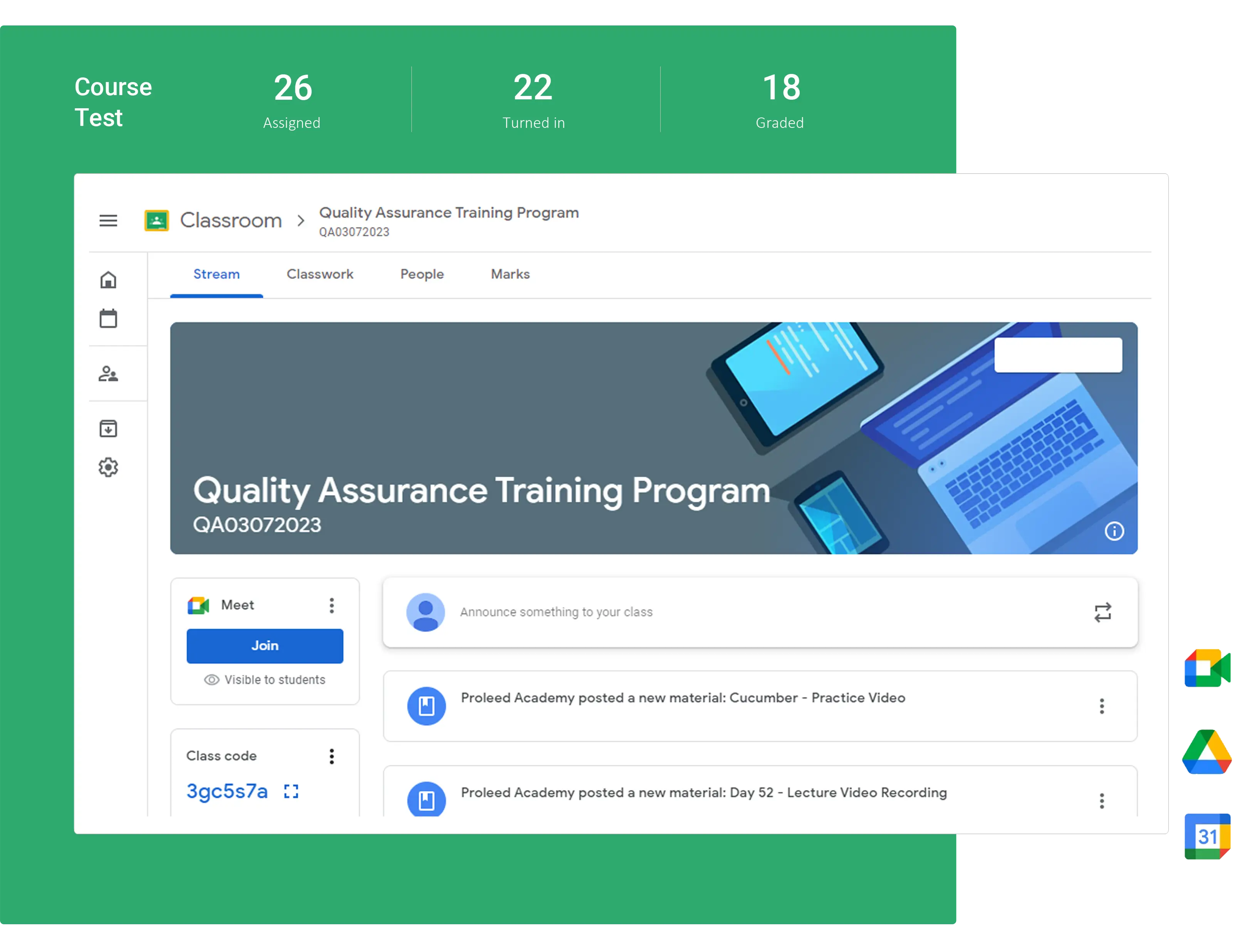
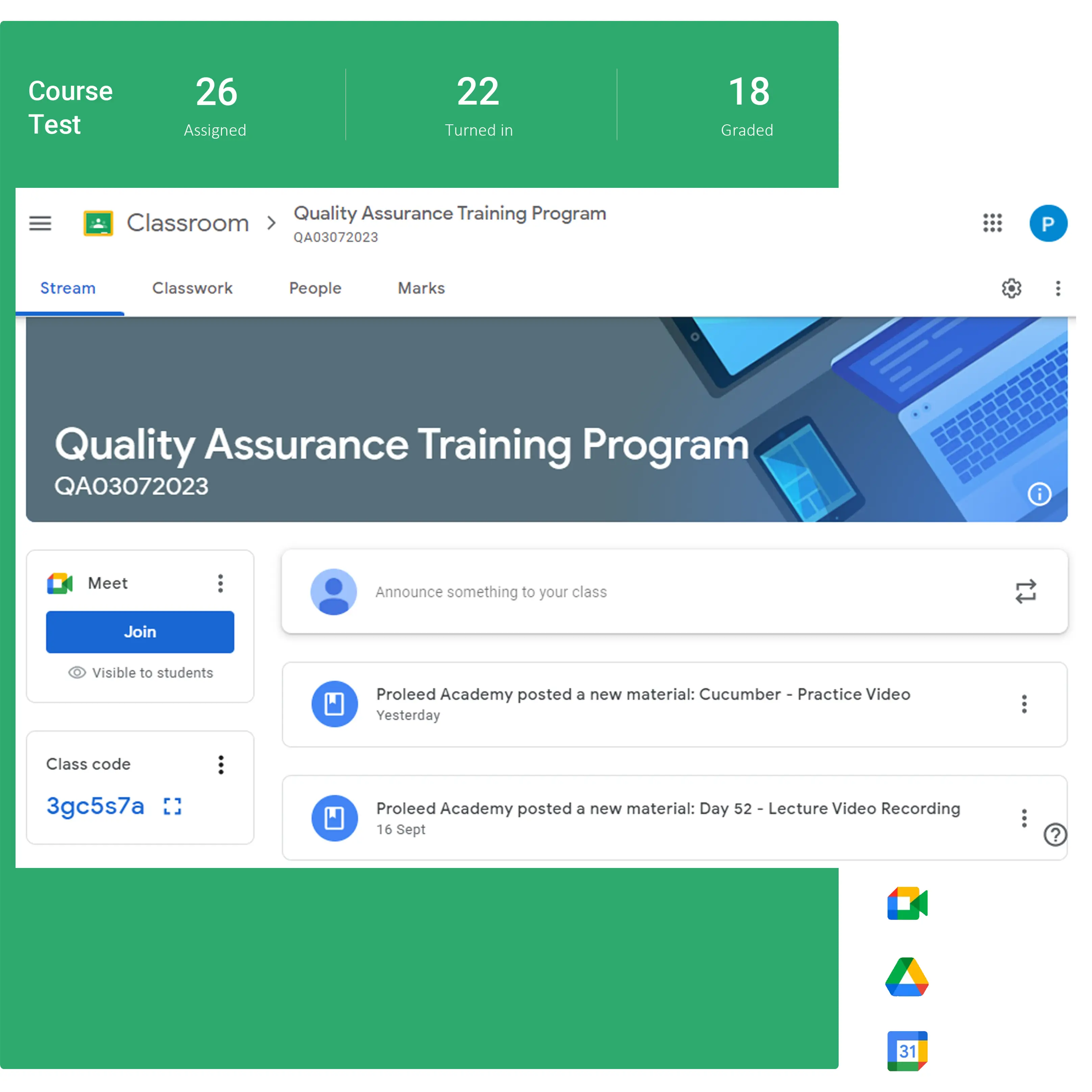
Advance Learning Management System
Get seamless, interactive and personalized learning experience powered by Google Classroom.
Lifetime Access to Course Material
Effective and efficient Communication
Recoding of every live session
Streamline assignments
Easy grading
Eco-friendly way of learning Paperless, No hassle
Why Proleed Should Be Your Only Choice
Instructor-Led Live Training Sessions
Live training sessions where you can ask queries while the class is going on
Advanced Learning Management System
Access learning material anywhere and anytime you need though out lifetime
Instant Doubt Clearance Sessions
Doubt clearance session after every class from the same trainer to resolve your doubts
Premium 10:1 Student : Trainer Ratio
Unmatched 10:1 Student : Trainer Ratio to ensure personalized attention to every student
Hands-on Experience on Live Projects
Working on live projects to enhance your practical skills and knowledge
Artificial Intelligence Online Training Course with Live Classes
Proleed's Artificial Intelligence Training Course is a master program with live classes designed to help aspiring professionals to excel in the rapidly growing field of AI. Our course encompasses essential subjects include Artificial Intelligence, Machine Learning, Deep Learning, Agentic AI, and Generative AI. We will work through these topics in a logical manner to give you a holistic picture of how intelligent systems are conceived and how they work.
We also provide you a chance to work on real-world projects with an aim to provide you with firsthand experience with predictive modeling, artificial neural networks, AI agents, generative applications like text and image generators and automation tools. The course is taught by working professionals, who aim to provide you with as much realistic experience as possible with the goal of facilitating problem solving and innovation. If you are looking to transition to AI, upskill in order to advance your career, or to lead AI driven projects, Proleed will help you become a competent and capable practitioner for the impending AI future.
What’s included?
Interactive Sessions that foster active participation
Instant-Doubt Clearance Sessions
Collaborative Learning Environment
Access high-quality education
10:1
Student: Trainer Ratio
Premium learning that universities like Oxford & Harvard offer in Academics
First Time ever in IT Training by Proleed
Career Prospects
Artificial Intelligence Developer
Artificial Intelligence Engineer
Artificial Intelligence Expert
AI Researcher
AI Scientist
Machine Learning Developer
Machine Learning Engineer
Machine Learning Expert
AI Software Engineer
AI Architect
Artificial Intelligence (AI) Jobs Globally
Worldwide Demand, Limitless Opportunities
In the present age of technology, Artificial Intelligence is at the forefront of a revolution and driving innovation in a wide array of areas - from healthcare and finance, to automation. More organizations are using AI systems, and thus the need for more people skills to design and implement intelligent solutions is rapidly increasing. This global shift is creating exciting and exciting career opportunities for those prepared to master the science of intelligent machines.
Proleed's Artificial Intelligence Training Course (Master Program) prepares learners to excel in this fast growing field. By combining AI, Machine Learning, Deep Learning, Agentic AI and Generative AI, it provides a complete and practical learning experience. By applying learning in real-world projects, learners gain the competence and confidence to innovate, engineer, and lead the progress of the discipline (Artificial Intelligence).
On-the-spot Live Doubt Clearance Sessions with every lecture. No waiting!
Proleed offers the daily doubt clearing session for providing the better learning environment to students.
Get 100% Placement Support from us until you get Placed
Proleed has industry’s best placement preparation process that enables our students to get their dream IT Job.
Step 1: CV Preparation
Our experts will help you to make professional resume for you.
Step 2: Building LinkedIn Profile
We will help you to build / optimize your linkedIn profile.
Step 3: Interview Questionnaires
We will provide you Interview Questions & Answers.
Step 4: Mock Interviews
Our experts will take mock interviews to make you confident.
Step 5: Placement Network
We will provider Guidelines to access placement Network.
Step 6: Got Dream job
Finally, You got your dream IT job
Companies which have hired our students
Become job ready by getting practical experience through real life corporate projects
Global Certification
Accredited by USA
Recognized Worldwide for IT Jobs
We provide certificate verification system to speedily verify our student's certificates online.
We provide certificate verification system to speedily verify our student's certificates online.
Who Can Take Artificial Intelligence (AI) Training Course?
It doesn’t matter whether you’re from IT background or Non-IT background; our Artificial Intelligence Training Course (Master Program) will equip you with the essential knowledge and skills to turn that passion into a rewarding career.
IT Students
Non-IT students
New Graduates
Experienced
What is included in this course?
Demanding curriculum designed by industry experts
3+ Live Projects that includes real-time use cases
Hands-on experience on advanced tools, languages & technologies
Live doubt clearance session after every lecture
Placement Preparation Process
Join Free Live Class
Thank You!
Your message has been received.
We will respond back to you as soon as possible.
Frequently Asked Questions Before Taking Proleed's Artificial Intelligence (AI) Training Course
Artificial Intelligence Training Course gives you the chance to work on live Projects. Live Project means that you work for a client and you have to make the project as per the client needs. But there is one more type of project that is dummy Project, which is created by you without any client specifications. Both the project can be uploaded on domains, but at the time of an interview live project will get more preference.
Here, we accept payment through different modes like Master Card, Visa Card, and net Banking.
Absolutely yes, Proleed’s all training courses allow you to learn every concept in in-depth form. It includes all levels of training from basic to advance along with real life based live projects. You will also get valid certification after the successful completion of course, so there is a no requirement of doing any other certification course.
Proleed gives the additional advantage of placement preparation along with all courses. After the successful completion of the Artificial Intelligence Training Course, students are ready for the technical round but for other rounds they need assistance, which is provided by specialized placement officers.
There is a three different ways by which the training is delivered to candidates;
Live-Instructor Led Classes
Fast-Track Training
Corporate Training
No worries, if you missed a class you can cover that topic without any problem, because our all the live lectures are recorded also. So, you can get the recorded videos of those missed sessions.
There is no doubt that artificial intelligence is one of the fastest growing career paths in today's digital age. It is an opportunity where companies everywhere are looking for skilled practitioners who bring better, faster and easier results with AI. The opportunities for AI practitioners will only increase as companies and innovations apply intelligent systems to every business and innovation practice.
Proleed’s Artificial Intelligence Training Course (Master Program) prepares you with the foundational knowledge and applied experience you will need to prosper in the field. Our teaching combines AI, Machine Learning, Deep Learning, Agentic AI and Generative AI to give you a thorough and applied understanding of intelligent technologies namely AI using advanced intelligent technologies. Under the supervision of our expert mentors and real-world experience, you'll understand key concepts in AI from data driven modelling to autonomous and generative intelligent agents. By the end of the program, you'll be fully prepared to develop intelligent solutions, support innovations, and gain a deep understanding of Artificial Intelligence.
Artificial Intelligence AI Training Course in other cities
 Proleed Certified Master Program