
Table of contents
- Introduction
- Why Enterprises Must Carefully Choose Their LLM Strategy
- What Are Open-Source Large Language Models?
- What Are Closed (Proprietary) LLM Models?
- Open-Source LLMs vs Closed Models — Detailed Comparison Table
- Real-World Enterprise AI Use Cases Comparison
- When Should Enterprises Choose Open-Source LLMs?
- When Should Enterprises Choose Closed LLM Models?
- Hybrid AI Strategy: Combining Open and Closed Models
- Common Mistakes Enterprises Make When Choosing LLMs
- Decision Framework: Which LLM Strategy Is Right for You?
- Frequently Asked Questions
- Final Verdict: Open-Source vs Closed AI Models
Open-Source LLMs vs Closed Models: Which Should Enterprises Choose?
Introduction
Enterprises are moving toward using Large Language Models (LLMs) in many of their business applications. From using automated customer service bots to having internal knowledge assistants or AI copilots, LLMs will be at the heart of most modern enterprise software systems.
With increased adoption of AI, all businesses need to determine which model architecture (open source versus closed) best suits their needs, and the debate over which type of model architecture is the best fit has become one of the toughest questions to be answered in the enterprise AI industry.
For professionals wishing to build an understanding of these architectural choices, many of them will seek out structured learning programs, such as those offered through Artificial Intelligence Training Courses, where they will explore in more detail about LLM architecture and AI infrastructure, along with actual deployment strategies for AI within an enterprise setting.
Why Enterprises Must Carefully Choose Their LLM Strategy
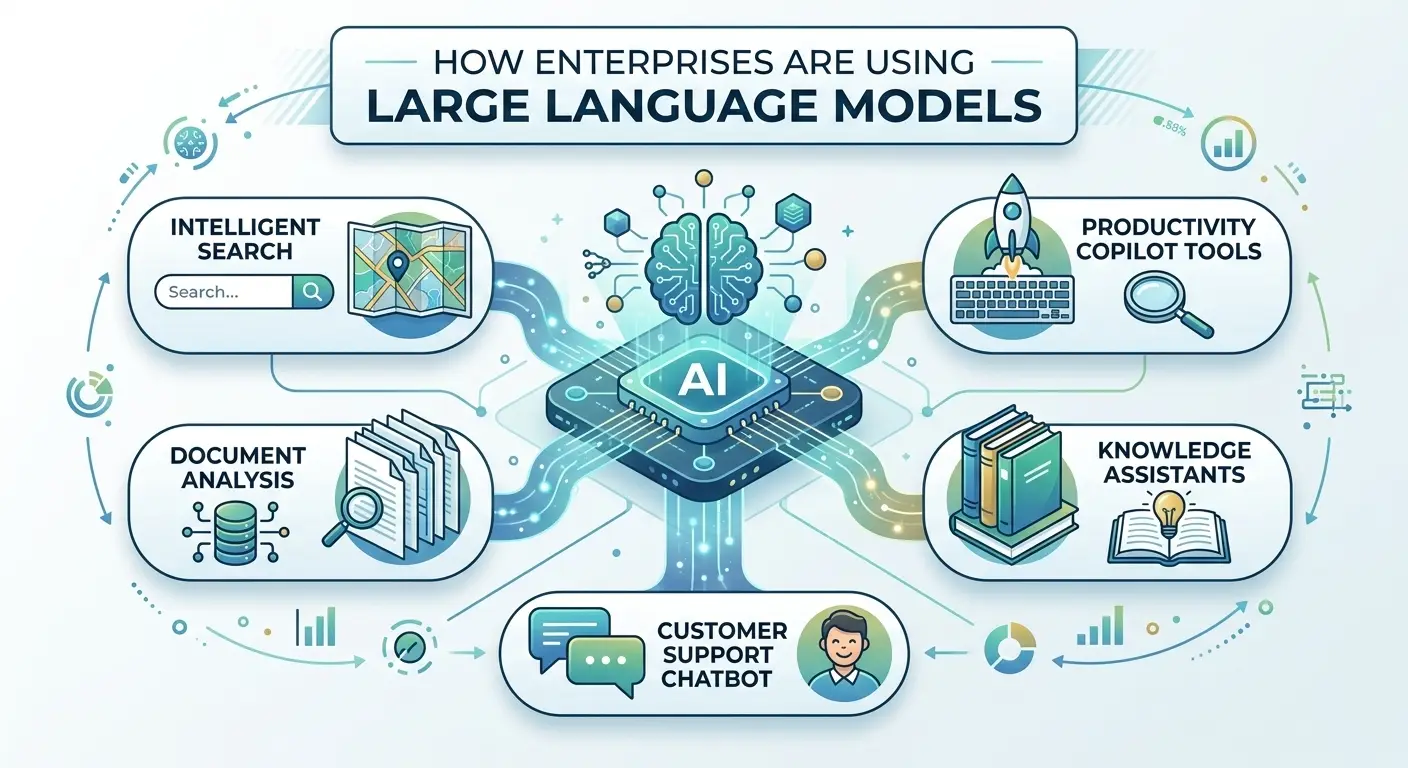
Deciding what sort of LLM model is right for your purposes is not just a technical issue; your choice affects costs, the potential to grow (scalability), security and the ability of the enterprise to innovate with AI over time.
Where we see the Enterprise AI applications coming to life is:
- The use of AI-powered knowledge assistants
- Automated Customer Support
- Automated Document Analysis
- Copilot-like tool to enhance internal productivity
- Intelligent Searching
Because of the nature of the interaction with sensitive business data in the use of these systems, model choice is now a strategic infrastructure decision.
When selecting an LLM approach, Enterprises need to assess several criteria including:
- Infrastructure costs
- Requirements for data privacy
- Vendor lock-in risk
- Customization abilities
- Performance requirements
The impact of LLM model choice on future scalability of AI will depend on the architecture selected; a bad architecture could end up as:
- Vendor lock-in
- Increasing operational costs
- Limited customization
- Security risks
What Are Open-Source Large Language Models?

Definition and Core Concept
Open-source language models are AI models where code, architecture, and weights are publicly available. Organizations can download, host, and modify these models as well as fine-tune them to meet their requirements. Companies can also run the open-source large language models on their infrastructure rather than depending on an external API.
Typically, enterprises have three different methods to deploy the open-source models:
- Hosting on a cloud/on-premises
- Fine-tuning the models to their internal datasets
- Integrating the models into more extensive AI services
Prominent open-source language models include:
- LLaMA from Meta
- Mistral from Mistral AI
- Falcon
- BLOOM
The advantages of using open-source LLMs for enterprise applications include:
- Control of the model: The corporation has control over the model’s hosting, training, and deployment.
- Customization of the model: Businesses can train the model using proprietary datasets and develop custom AI systems based on their domain.
- The ability of many organizations to enhance their factual accuracy through fine-tuning their LLMs with retrieved documents, and to decrease hallucinations, by combining these two strategies together into a single RAG comprised of fine-tuned and retrieved AI systems. Read more about this in our comparison of RAG vs Fine-tuned AI systems and how enterprises choose between the two different methods when designing an AI system.
- Ability to Host Models Internally: Businesses can self-host their models, which may be essential for industries that have high data security obligations.
What Are Closed (Proprietary) LLM Models?

What is Proprietary AI Models?
Proprietary or closed LLMs are developed and supported by a private company which provides access via an API, instead of hosting the LLM directly.
API-Based Services for AI
Most proprietary models are delivered through cloud-based APIs that allow developers to access and utilize AI capabilities without having to manage the infrastructure.
Some examples of AI services delivered in this way include:
- Natural language processing (NLP)
- Content generation
- AI assistants
- Chat bots
How Enterprises Use Closed Models
Typically closed model access for enterprises will be through:
- Cloud-based APIs
- SaaS integration
- AI development platforms
- Enterprise AI services
This dramatically reduces the complexity of technology infrastructure.
The Benefits of Closed LLMs
Closed LLMs provide several advantages to the enterprise:
High Performance and Optimization
Proprietary models are built from extremely large data sets and built on an optimized infrastructure.
Reduced Infrastructure Complexity
Organizations do not need to build and manage GPUs, an entire training pipeline and/or deploy the model.
Faster Implementation
Organizations that are able to integrate AI within days versus months.
Open-Source LLMs vs Closed Models — Detailed Comparison Table
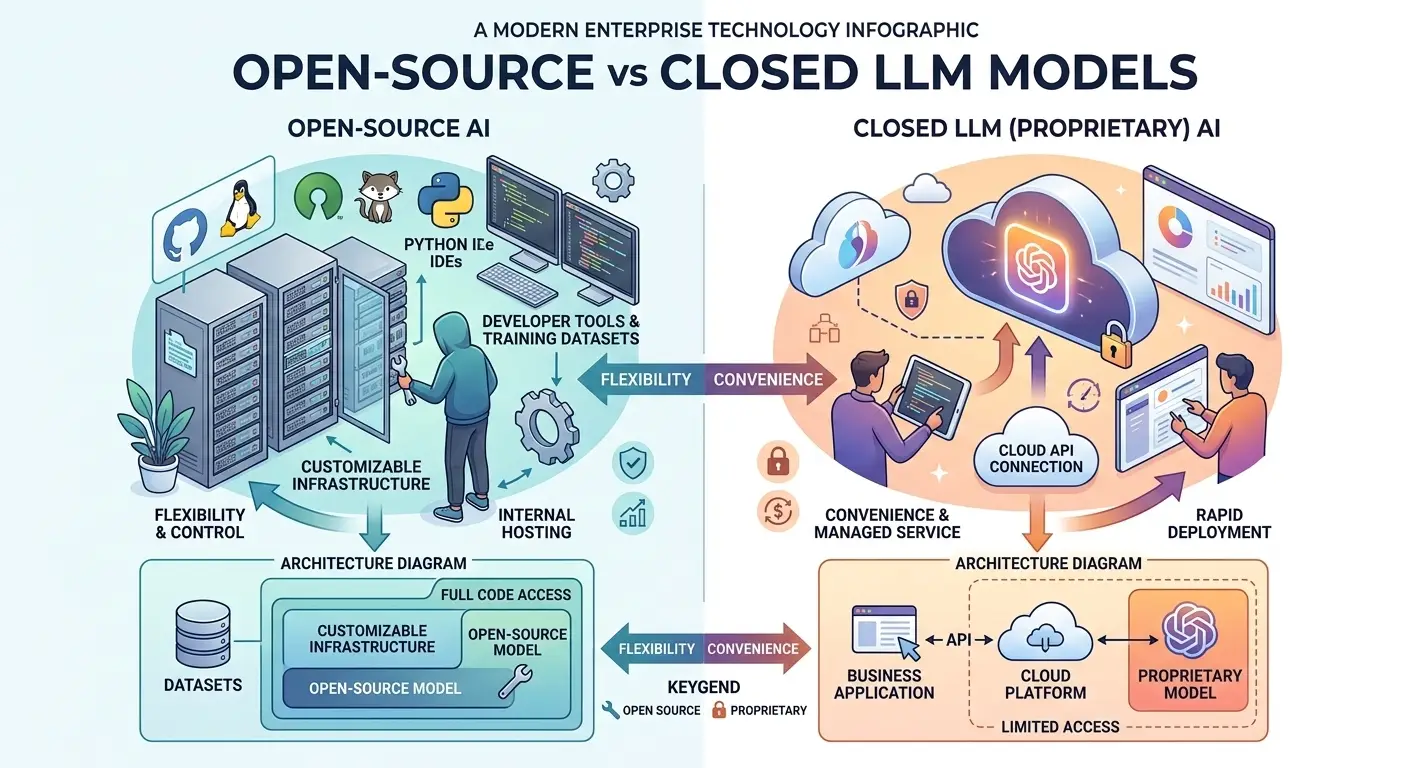
| Factor | Open Source LLMs | Closed LLMs |
| Model Access | Model weights are publicly available and downloadable | Only accessible via API |
| Infrastructure | Self-hosted and managed by user | Managed entirely by provider |
| Customization | Highly customizable (fine-tuning and changing architecture) | Limited customization options |
| Cost structure | Higher setup cost, but lower long-term cost | Pay-per-use cost based on API |
| Data Privacy | Data stays in the enterprise and does not leave | Many data processed through vendor’s servers |
| Performance | Good performance but will often depend on what optimization and hardware used | Good performance due to optimization through large-scale training |
| Vendor Lock-In | No vendor lock-in | Very dependent on using vendor’s API |
| Scalability | Require ability to scale infrastructure | Automatically scales |
| Security Control | Users have full control over data and model environment | Vendor’s security policies apply to users |
| Enterprise Suitability | Best suited to companies looking to build a custom AI Platform | Best suited to organizations trying to quickly deploy an AI solution |
Real-World Enterprise AI Use Cases Comparison
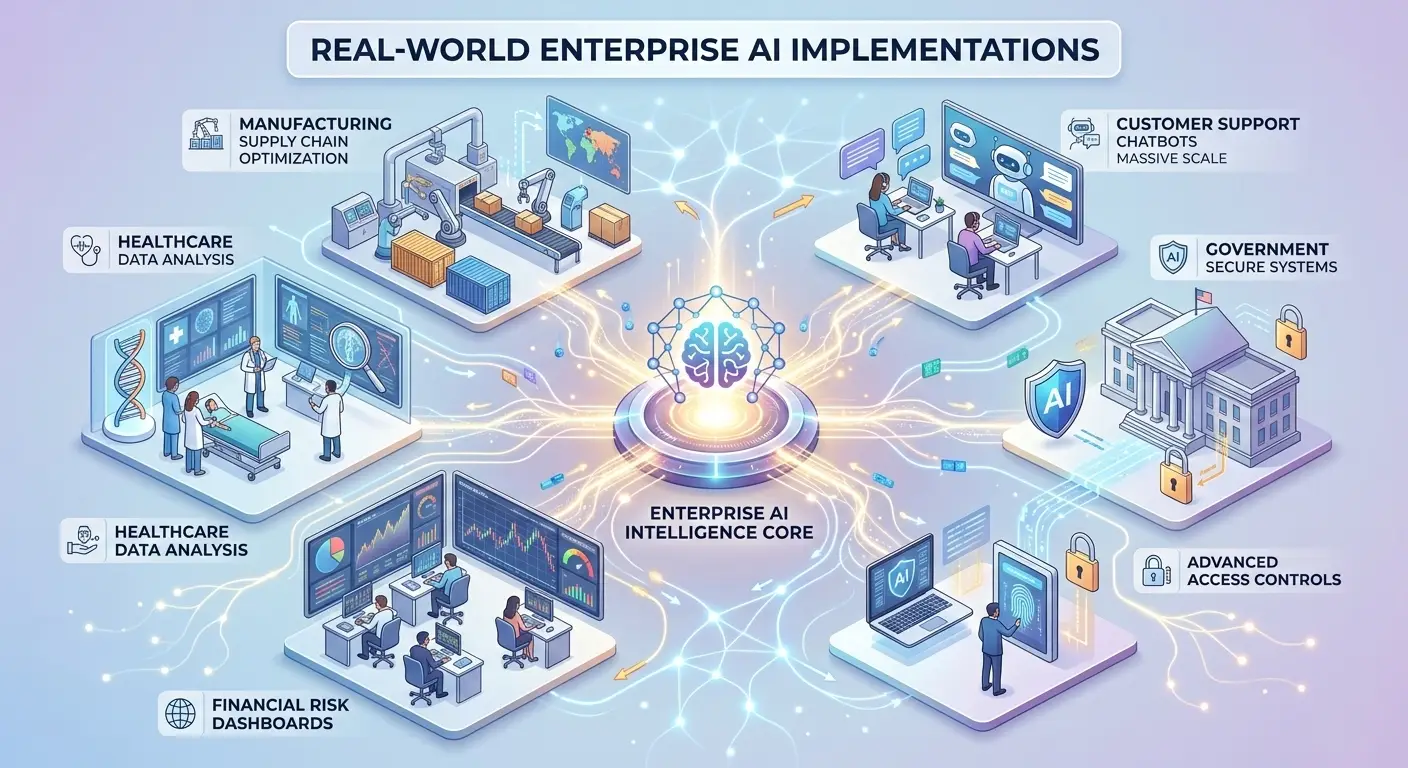
Enterprise needs vary greatly based on the type of LLM that is required.
Where Open-Source Models Work Best
The best types of environments to use open-source models are those which have an emphasis on control and customisation. Examples include:
- Enterprise knowledge assistants
- AI deployment on-premise
- AI systems that are intended for use in sensitive industries
- AI product development tailored to specific customer requirements
For security reasons, open-source models are often preferred by financial, health and government organisations.
Where Closed Models Excel
The types of applications where closed models excel are those in which responsiveness and performance are most important.
Examples include:
- AI Co-pilots
- Chatbots for customer service
- Automation in SaaS applications
- Platforms that generate content (text/written content).
Typically, organisations that choose to develop and deploy LLMs quickly would select a proprietary (closed) model.
When Should Enterprises Choose Open-Source LLMs?
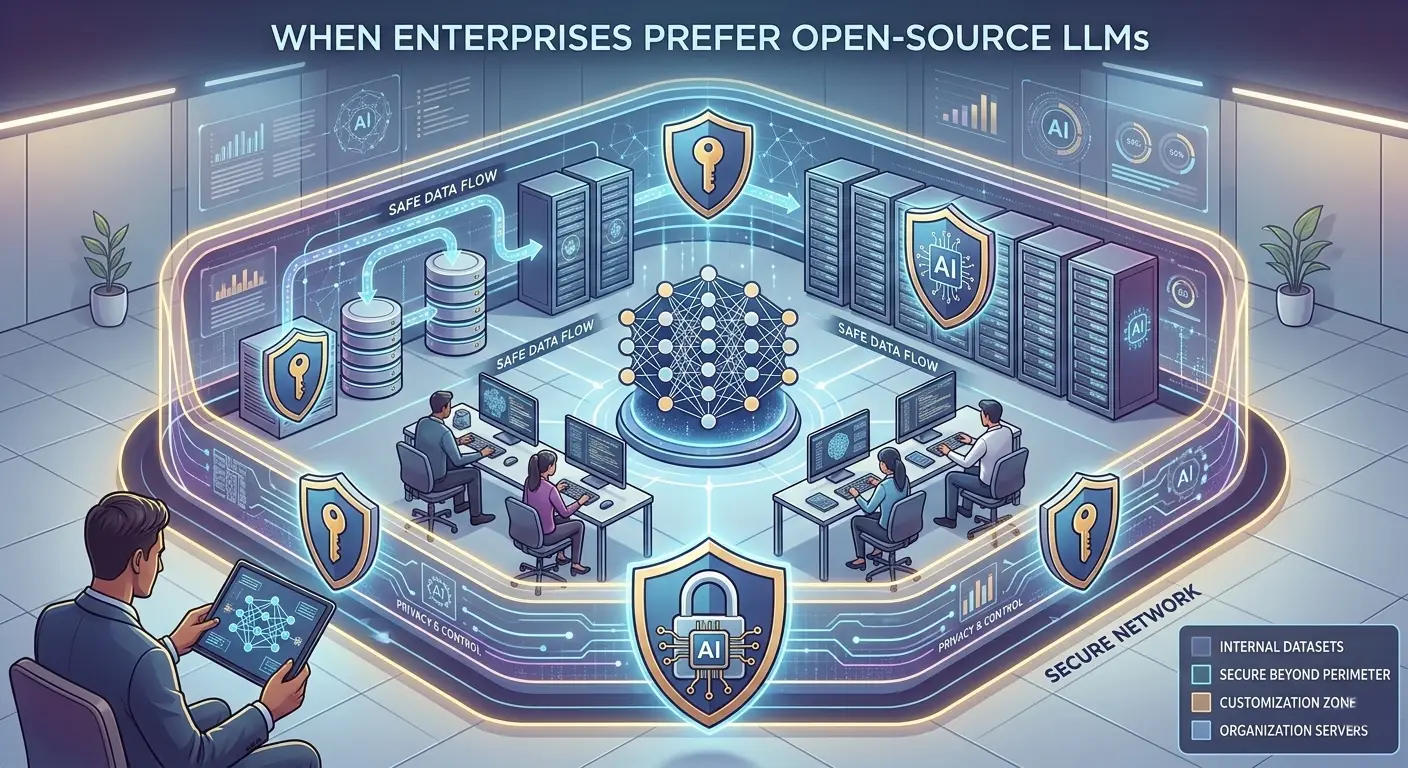
Enterprises may want to use open source LLMs when they want complete control of their AI technology.
Open-source models are well-suited when:
- Protection of data privacy is of utmost importance
- Need for training models in a custom way
- Create controlled environments
- Reduce costs over the long-term
Some Industries Utilizing Open Source LLMs
The following industries utilize open-source models:
- Healthcare providers
- Financial service providers
- Government systems
- Research organizations
When Should Enterprises Choose Closed LLM Models?

Organizations requiring speed and simplicity will find closed models to be suitable. Enterprises should use a closed model if:
- Rapid deployment is critical
- High-performance cannot afford delays
- There is a need to manage infrastructure minimally
- Development resources are restricted
Common Open Use Cases
Some common uses of closed models include:
- AI Assistants
- Chatbots
- SaaS Applications
- Marketing Automation
- Content Generation
These applications leverage the immediate availability of prepackaged AI capabilities at time of implementation.
Hybrid AI Strategy: Combining Open and Closed Models
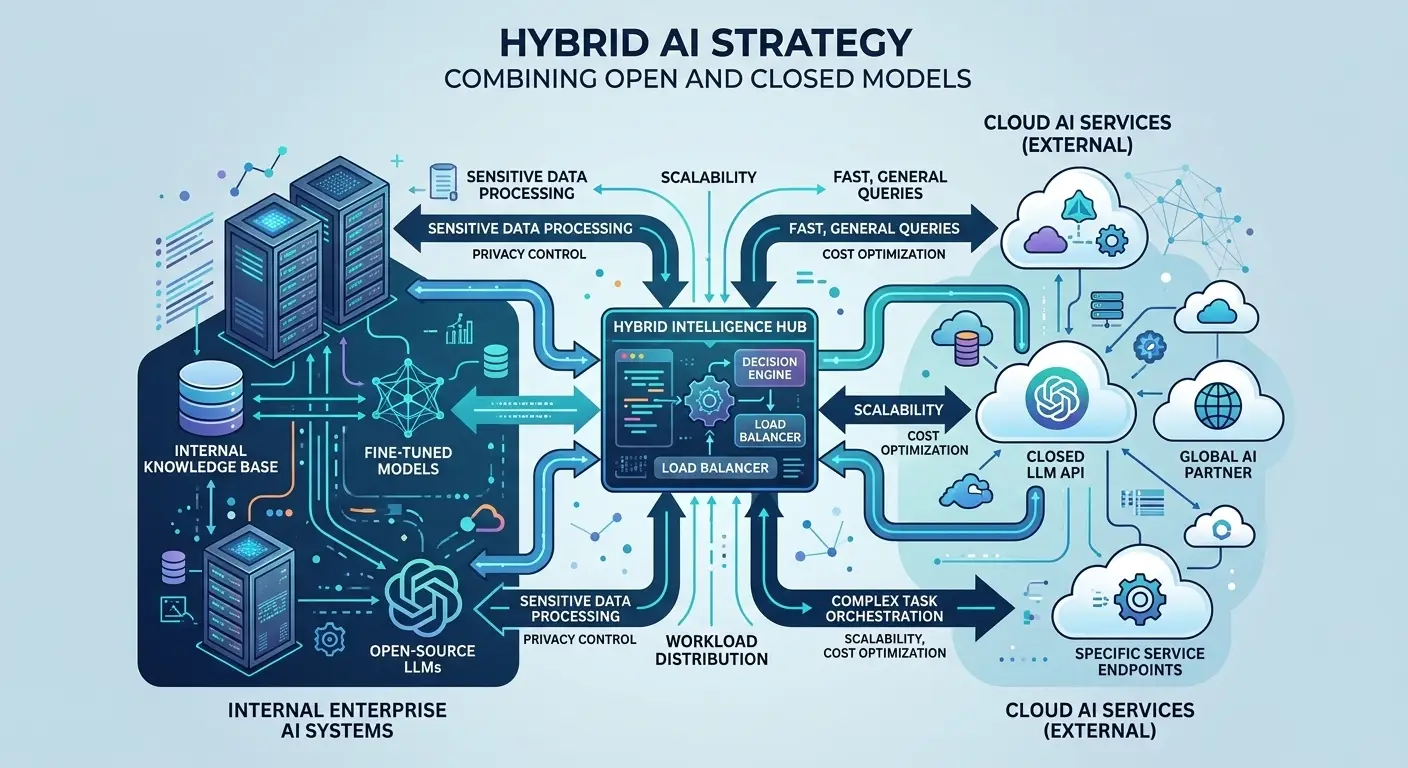
A majority of companies are adopting a hybrid AI architecture, which combines both open-source models to manage internally developed AI systems with a closed model to power applications built outside of the organization.
Why More Companies Are Using Hybrid Architectures
Using hybrid AI allows a company to achieve the following:
- Cost-effective
- Performance-based
- Investments based
- Deployment-based
Larger corporations frequently combine both hybrid systems and traditional AI systems in order to reap the greatest rewards from both systems.
Common Mistakes Enterprises Make When Choosing LLMs
Companies can mistakenly believe that they have made a successful decision in selecting an AI system. Some of the common errors made by companies when choosing AI models include:
- Choosing Models Based on Hype – Companies choose a model instead of considering the requirements of the architecture.
- Ignoring Infrastructure Costs – Companies may want to use an open-source AI model but need large amounts of expensive GPU hardware to run the model.
- Underestimating Security Risks – Companies use proprietary APIs to access services or build applications without properly assessing the security of the API.
- Over-reliance on Proprietary APIs – Over-rely on external AI providers, increasing vendor dependency
Making these mistakes can result in:
- Higher costs of operations
- Less flexibility in terms of using AI
- Long-Term scalability problems
Decision Framework: Which LLM Strategy Is Right for You?
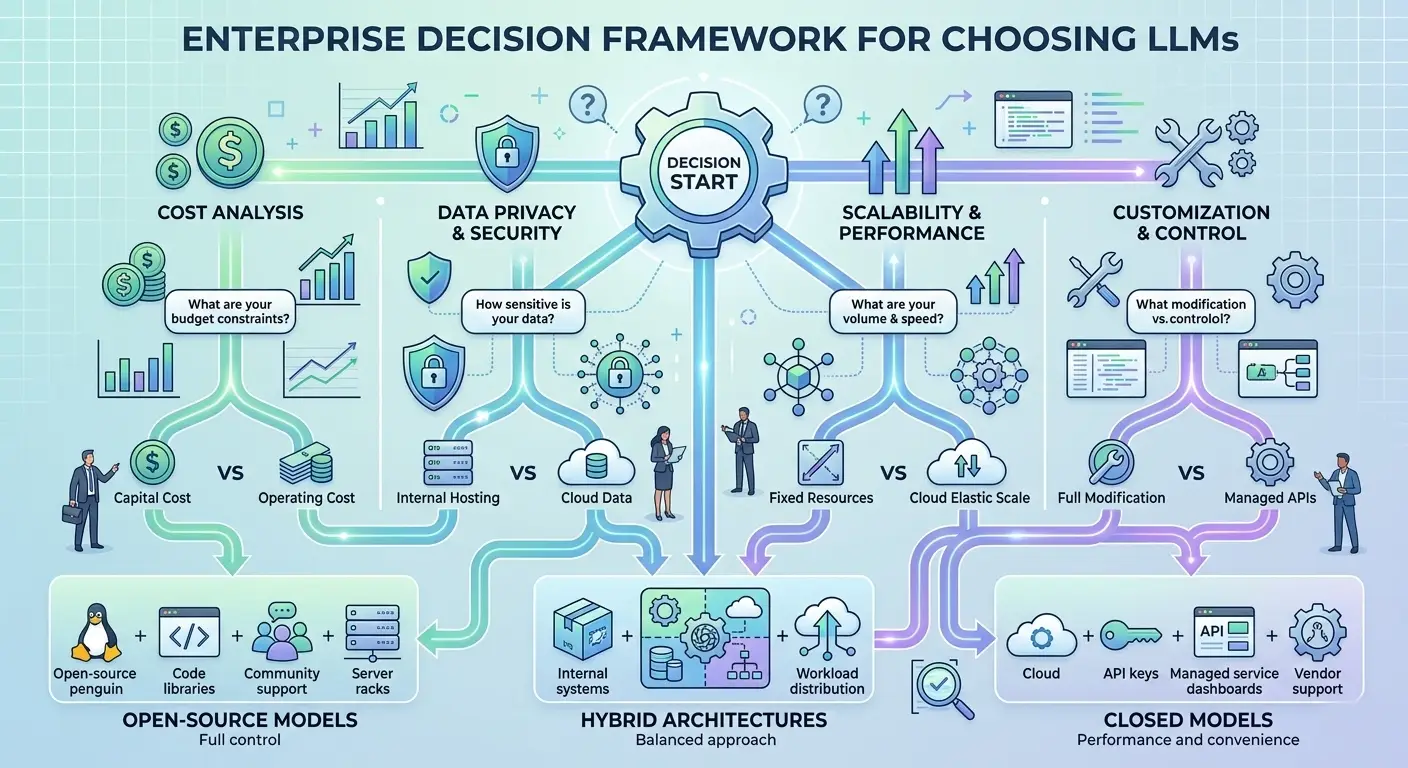
Determining the best LLM strategy is contingent on the business objectives and type of backing available to them.
In a model development approach, open-source LLMs may be appropriate where they require:
- Complete ownership of the infrastructure
- Ability to develop/customise their own model
- Reliable data privacy
- AI systems related to specific industry sectors or domains
In contrast, if the organisation requires:
- Quick to deploy AI solutions
- High performing LLMs
- Lowest level of infrastructure investment
For organisations wanting an LLM solution that offers:
- Scalability at the enterprise level
- Ability to optimise total cost of ownership
- Balance between security versus performance
Frequently Asked Questions
Final Verdict: Open-Source vs Closed AI Models
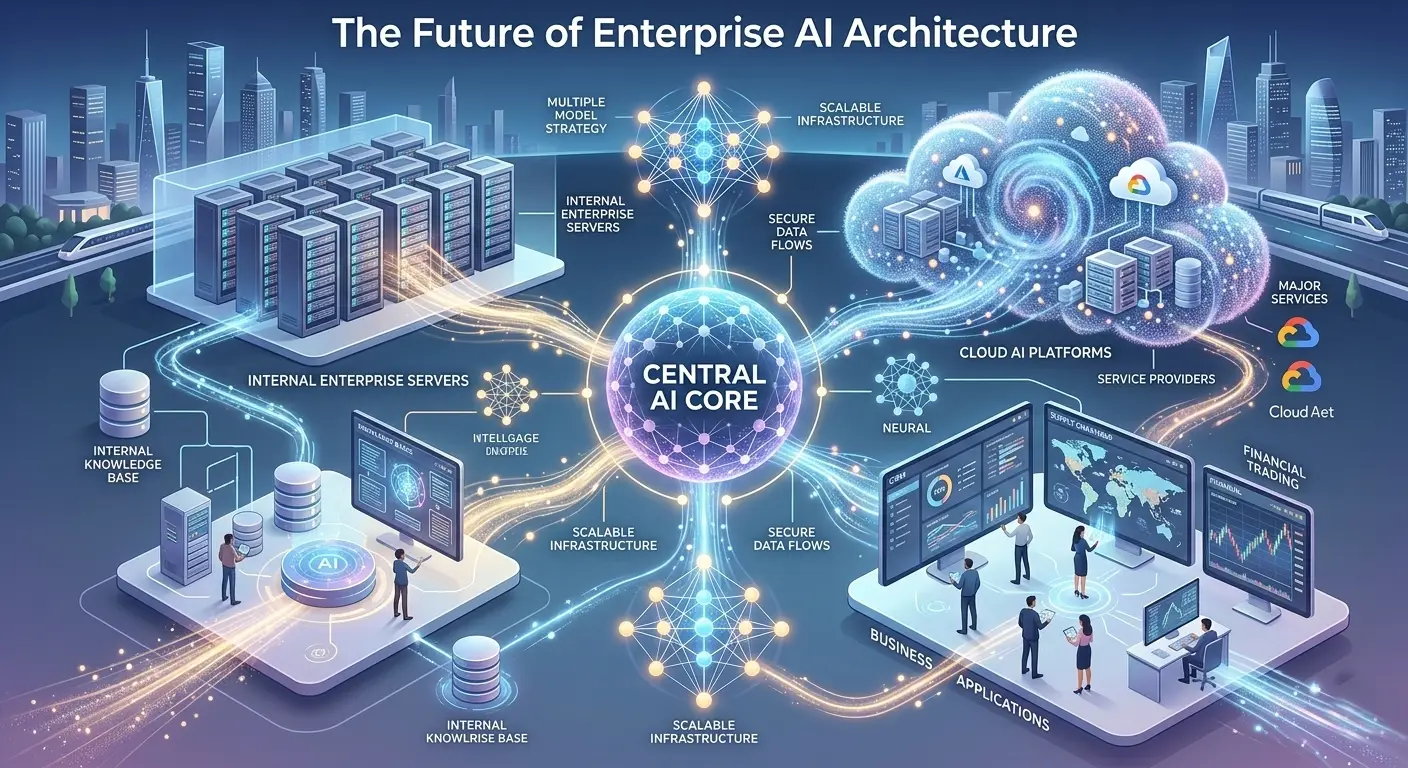
Open Source LLMs offer control, flexibility, and extensive customization.
Closed models offer high performance, convenience and speed of deployment.
Most organizations can achieve their objectives by not selecting one type of AI but rather developing an AI architecture that supports their business strategy, existing IT capabilities and future scalability requirements.
Organizations that can determine when to use Open models, Closed models and Hybrid AI architectures can successfully implement scalable and future-proof AI systems.