Table of contents
- Introduction
- Why AI Is Moving Toward Agent Based Architectures
- Understanding Single-Agent AI Systems
- Where Single-Agent Systems Start Breaking Down
- Understanding Multi-Agent AI Systems
- Comparing Single Agent and Multi-Agent Systems
- Real-World Use Cases
- When Should You Choose Single-Agent vs Multi-Agent?
- Common Mistakes Teams Make While Building Agent-Based AI
- Performance, Cost, and Long-Term Scalability Trade-Offs
- The Future of Agent-Based AI Architectures
- Final Verdict: Which Architecture Scales Better?
Single-Agent Vs Multi-Agent AI Systems: Which Architecture Scales Better in Real Applications?
Introduction
AI technology has moved quickly from static systems of responding to prompts, to complex workflows that AI autonomously manage. As business models are focused on increasing the efficiency of automation through AI technology; AI platforms have transitioned from legacy systems of modelling tasks, into task-based multifunctional agent-based ecosystems of intelligent agents that are capable of reasoning, planning and executing tasks without human interaction.
The knowledge related to the modern functioning of AI architectures is essential for Developers, Engineers and Technology leaders. There are numerous advanced architecture design frameworks and Artificial Intelligence Training Courses on AI architecture being offered by many organisations focusing not only on using AI models but also on strategies to implement AI into the workforce.
One of the most frequently asked questions regarding AI architecture is whether or not single agent architecture or multiple agent architecture provides better scalability, performance and reliability within production environments.
Why AI Is Moving Toward Agent Based Architectures
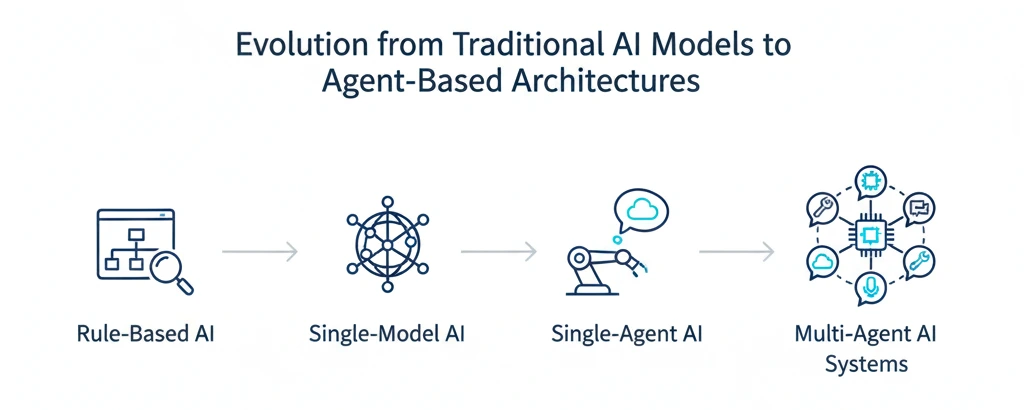
Conventional AI models are limited to performing single operations, such as answering questions, outputting content through text generation, and classifying information. The demands of current applications require AI to manage multi-step processes, work within multiple tools and systems simultaneously to deliver work, and adapt to an ever-changing environment.
Traditional AI systems are designed for specific inputs that have a specific output, whereas agent-based architectures are designed to give the AI system autonomy, memory, and decision-making capabilities. There are several benefits of using agent-based AI systems in your business:
- Automated orchestration of tasks
- Improved efficiency of process flow
- Scalability in solving complex problems
- Decreased need for human intervention
The shift from traditional AI to agent-based AI systems is indicative of the move from purely reactive intelligence toward collaborative and proactive systems capable of managing complex operational processes.
Understanding Single-Agent AI Systems

A single-agent AI system utilizes a centralized model or smart agent to handle all input, decision making and output generation.
An AI agent holds full responsibility for the complete process flow in a single-agent architecture, as it provides user input, information processing, reasoning, and an end-product response without any delegation of tasks to other agents.
The single-agent type of architecture excels when the tasks being completed are:
- Linear and well-defined
- Not complicated
- Heavily reliant on centralized decision making processes
- Designed for conversational interfaces.
Some common applications include:
- Chatbots and virtual assistants
- Content-Generation Software
- Code-Assistance Software
- Knowledge Retrieval Systems
Where Single-Agent Systems Start Breaking Down

Single-agent AI has the benefit of being easy to use but becomes increasingly more challenging when dealing with complex tasks or distributed intelligence.
Scalability Problems
The sequential way single agents execute tasks limits their ability to effectively execute many tasks at once and allocate their resources toward multiple users to manage a heavy workload.
Difficult-to-Use Complex Workflow
In the modern enterprise, there are many types of workflow including research, validation, decision-making, and execution. When using a single agent to execute all of these types of workflows, it often does not perform well.
In Actual Production Bottlenecks
Single-agent systems have:
- Increased latency during times of lots of demand.
- Higher probability of one-point failure.
- Limited ability to adapt to changing workflows.
As AI use increases, companies are moving to more distributed intelligence architectures due to these limitations of single-agent systems.
Understanding Multi-Agent AI Systems

Multi-agent systems are made up of several separate AIs that work together to complete complex tasks. Each agent is responsible for a specific role, and communicate with one another towards the common goal(s) of all agents involved.
How Multi-Agent Systems Work Together
With multi-agent systems, a job is broken into several jobs, each agent works in an area that they are expert at, such as:
- Research and gather data
- Analyze and reason
- Verify decisions
- Carry out assigned tasks
This distributed intelligence provides greater speed and scalability.
Reasons Companies Use Multi-Agent Systems
There are several reasons companies are adopting multi-agent frameworks, such as:
- More efficient performing tasks in parallel
- More flexible management of workflow
- More resilient system design
- More effective management of enterprise-scale operations
With a multi agent framework, AI can function more like a coordinated team instead of a sole worker.
Comparing Single Agent and Multi-Agent Systems
Scalability and Load Distribution
In a single agent architecture, the tasks are distributed from one central location. As such, single agent architectures can be limited in their ability to scale. On the other hand, in a multi-agent architecture, multiple agents are used to share the workloads between them, allowing multiple agents to work with larger amounts of data and perform more complex tasks than would be possible in a single agent architecture.
Performance and Speed/Throughput
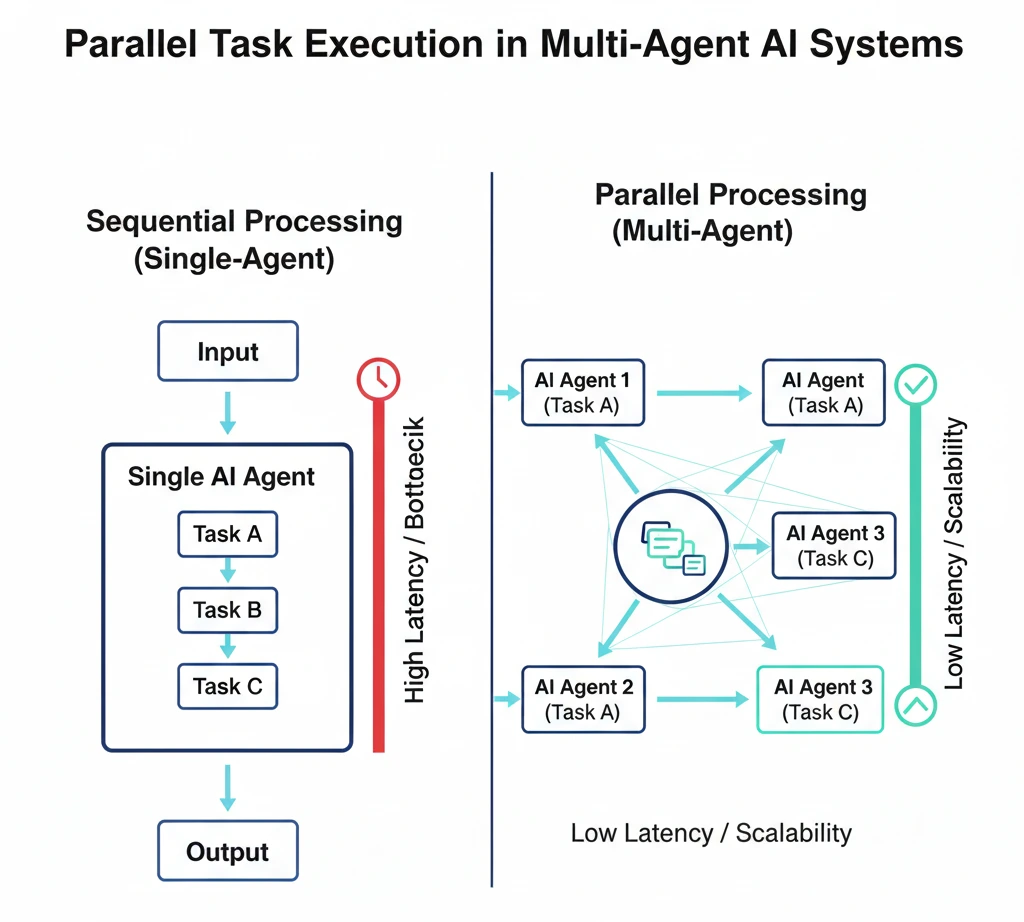
Single agent architectures typically have slower response times than multi agent architectures due to the fact that they process their tasks in a sequential manner. Whereas, multi-agent architectures will see significant performance gains when processing complex tasks because of the parallel nature of their processing.
Complexity and Engineering Effort
Single agent systems are less complex than multi-agent systems and are therefore easier to develop, maintain, and operate, and require less agent coordinations among agents. In addition, when building a multi-agent architecture, it is necessary to build in more complexity regarding the requirements for planning and coordinating between agents compared with single agent systems.
Reliability and Fault Tolerance
Single agent systems are at risk of total failure if the single agent fails to function correctly, whereas multi-agent systems will have less risk due to the ability to perform their functions independently of one another, even if some of the agents become non-functional.
Cost & Infrastructure Requirements
Generally, single agent architectures are less expensive to establish than multi-agent systems. A multi-agent system will require greater investment in terms of infrastructure, although expect to see much more efficiency and scalability from your long-term investment.
Flexibility & Adaptability
When it comes to flexibility, adaptive multi-agent systems are significantly more flexible than single-agent systems; as agents within an adaptive multi-agent system may be modified, replaced or added with minimal disruption to the entire architecture while agents in a single-agent system must be modified, replaced or added with a lot of disruption to the entire architecture.
Maintenance and Long-Term Upgradable
Single Agent Systems can’t be upgradeable without having to re-train the entire system (i.e., make major changes). However, updating multi-agent architectures modularly can help them become much more maintainable.
Available for Enterprise/Production Usage
Multi Agent Systems are the preferred solutions in Enterprise Automation, Large Scale AI Deployments and Complex Workflow Management.
| Factors | Single Agent | Multiple Agents |
| Scalability | Limited | Very High |
| Performance | Sequential Processing | Parallel Processing |
| Complexity | Lower Complexity | Higher Complexity |
| Reliability | Single Point of Failure | Distributed Resilience |
| Cost | Lower Start Up Costs | Higher Start Up Costs, Better Long Term ROI |
| Flexibility | Limited | Flexible and Adaptive |
| Maintenance | Centralized Updating | Modular Updating |
| Enterprise Suitability | Medium | Excellent |
Real-World Use Cases: Where Each Architecture Wins
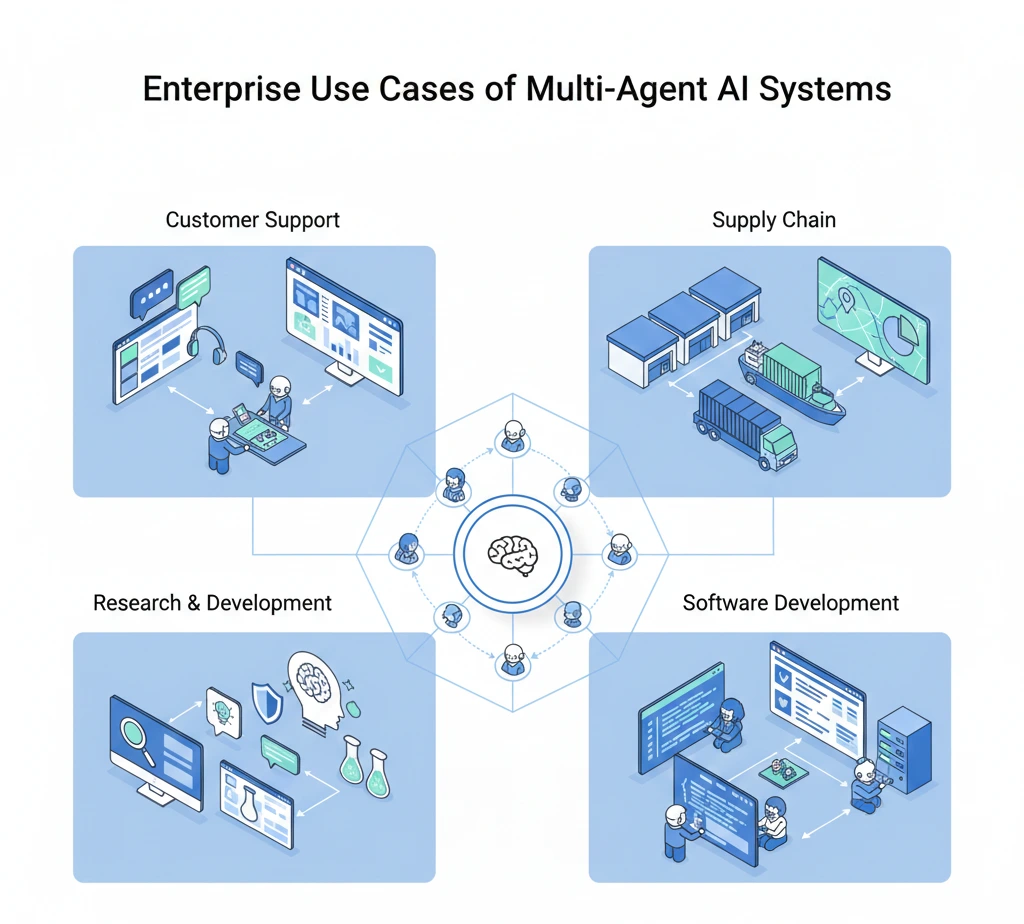
Success Characteristics of Single Agent Systems include:
- Chatbots that communicate with customers.
- Automation of writing and content creation.
- Assistants to improve individual productivity.
- Code completion tools.
Success Characteristics of Multi-Agent Systems include:
- Automation of enterprise-level workflows.
- Improved supply chain performance.
- Autonomous research capabilities.
- Large multi-user management of customer support.
- AI “co-pilots” in development, performing multiple functions.
When Should You Choose Single-Agent vs Multi-Agent?
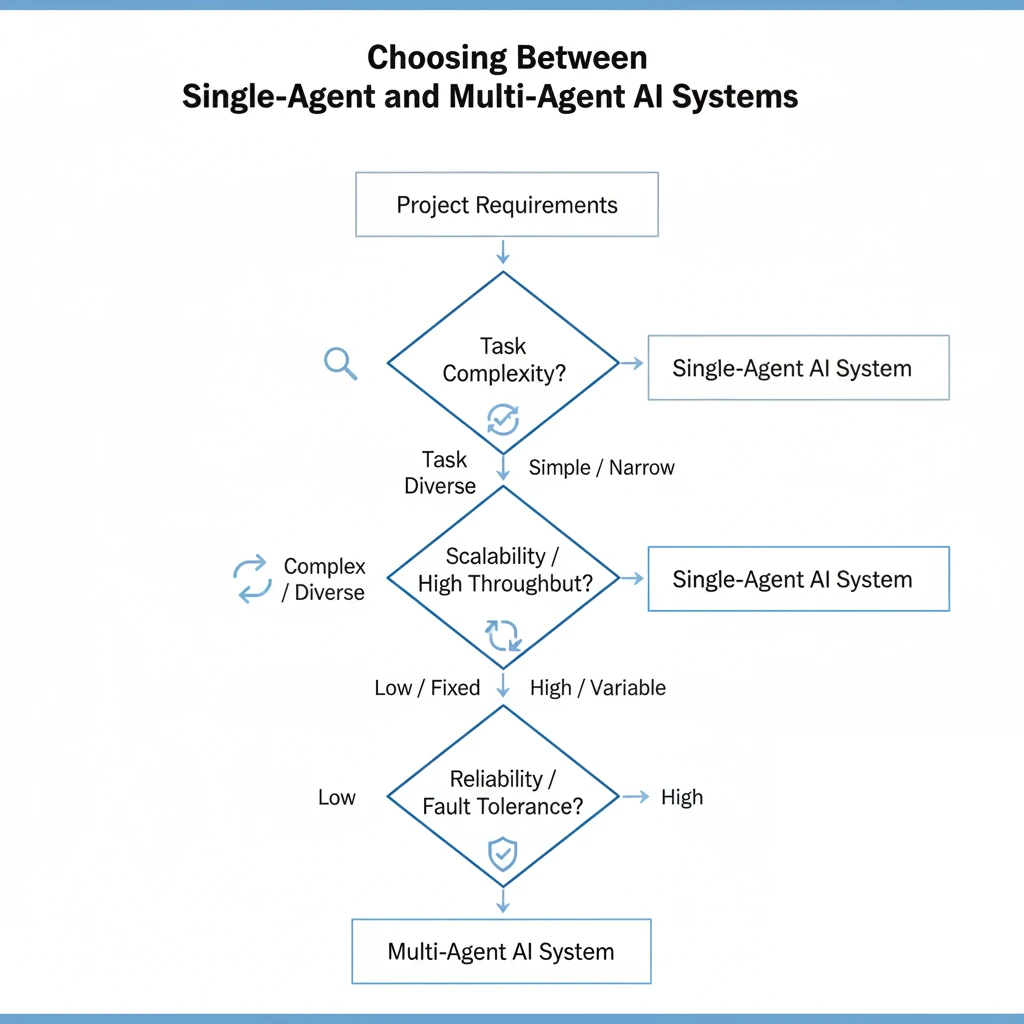
Use Single-Agent Systems for:
- Tasks that are simple and predictable.
- When speed of development is important.
- When the budget for infrastructure is small.
- Where centralized control is necessary.
Use Multi-Agent Systems for:
- Tasks that consist of many different steps and/or different domains.
- When scalability/automation are important issues.
- When systems need to run all the time.
- Where high levels of reliability are required for an enterprise.
Fast Assessment Chart
| Needs Description | Preferred Build |
| Basic processes | Single-Agent |
| Advanced automations | Multi-Agents |
| Affordable systems | Single-Agent |
| Large company – multi-site capabilities | Multi-Agents |
| Speedy prototype | Single-Agent |
| Duty cycle-based long-term automation programs | Multi-Agents |
Common Mistakes Teams Make While Building Agent-Based AI
Overuse of Multi-Agent System Architectures
Many teams do not take advantage of the architecture of a multi-agent system to provide a higher level of complexity than is needed, with no documented benefit.
Poor Task Decomposition
Dividing up responsibilities inappropriately creates inefficient communication and poor performance.
Insufficient Performance Monitoring and Evaluation
Distributed systems are normally difficult to debug if effective performance monitoring is not present.
Agents Are Treated Like Plug-and-Play Solutions
To achieve an effective agent-based AI system, agents need to be strategically designed, orchestrated and optimized properly.
Performance, Cost, and Long-Term Scalability Trade-Offs
Companies need to make sure that they invest in infrastructure while also making improvements in performance. Multi-agent systems can help scalability; however, multi-agent systems can also introduce additional costs for coordination and added complexity to a given system.
The speed of interaction or communication among agents, as well as how well agents manage to delegate tasks will result in differing latencies. Long-term scalability can be provided by using multi-agent systems, particularly in large businesses that continually increase their level of automation.
The Future of Agent-Based AI Architectures
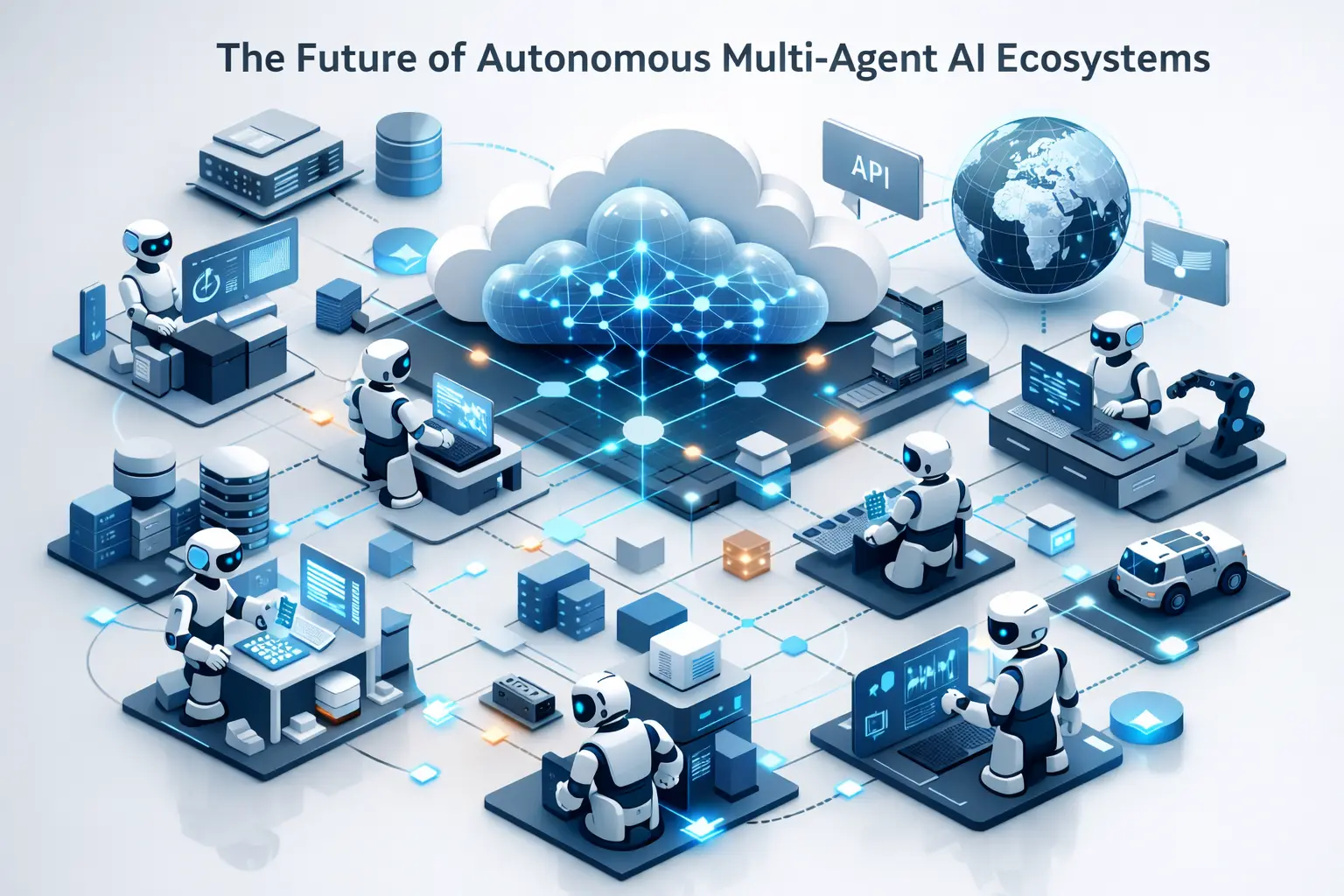
Autonomous ecosystems of agents who cooperate on different platforms, tools, and data sources are developing with artificial intelligence and where these developments will lead to:
- Networks of autonomous artificial intelligence agents
- Integration into external tools and Application Programming Interfaces, or APIs
- Multifaceted reasoning systems; and
- Collaborative intelligence is able to improve upon itself.
These developments suggest that there will be a large role for multi-agent systems in creating the next generation of artificial intelligence infrastructure.
Final Verdict: Which Architecture Scales Better?
The use of both single-agent and multi-agent systems contributes positively to today’s AI system development. A single-agent architecture can be used wherever a user needs to perform a discrete, directed or fast activity. As systems become more complex in workflow and scalability, however, multi-agent systems can offer far greater flexibility, robustness and long-term performance.
Many of the most successful AI solutions in enterprise applications have been created by combining single-agent capabilities to perform narrow tasks with collaborating multiple agents performing automation and orchestration across a large-scale system.