Table of contents
- Introduction
- What is Traditional AI?
- What Is Agentic AI?
- Agentic AI vs Traditional AI: The Key Differences
- Working of Agentic AI
- Applications of Agentic AI in the Real World
- Constraints and Ethical Issues
- The Future for Agentic AI: What is Next
- The Importance of Learning Agentic AI Skills
- Conclusion
What Is Agentic AI? Differences Between Agentic AI and Traditional AI, Use Cases, and Future Trends
Introduction
AI (Artificial Intelligence) has come a long way since its inception. The earliest versions of AI relied on rigidly defined rules to perform simple functions – similar to what calculators and basic spam filters do. While early AI technology had only a few capabilities, these early AIs performed only the functions for which they had been programmed.
As AI continues to expand technologically, today’s advanced AI has a much wider range of capabilities than early AI. Advanced AI can read and write, create visual artworks, and even operate vehicles. An offshoot of AI is what is termed as Agentic AI. These systems can develop plans, and make choices and act autonomously, without continual assistance from a human operator.
To fully grasp how these technologies function, you may want to pursue an Artificial Intelligence Training Course where you will gain practical experience using the different technologies that have been developed for use in creating the current set of AI systems.
What is Traditional AI?

Traditional AI is the term for systems designed for specific, predefined tasks. These systems are created with logic that is fixed and limited.
A spam filter, for example, can scan through emails to classify it into spam or not spam. A face recognition model can take an image and identify the individual in the image. But, it doesn’t know why it is performing these deliverables, nor can it change them while carrying out its job.
In addition, traditional AI systems need to rely on human prompts or labeled data to work. They are often effective, but reactive – they do something when they are triggered.
Examples of Traditional AI include:
- Google Search recommendations
- Image Recognition Systems and Speech Recognition Systems
- Chatbots that only answer FAQs
- Spam Filters and Fraud detection
In summary, traditional AI performs ideal for a single task. It does have limitations in showing initiative, understanding context, and having a long-term memory.
What Is Agentic AI?
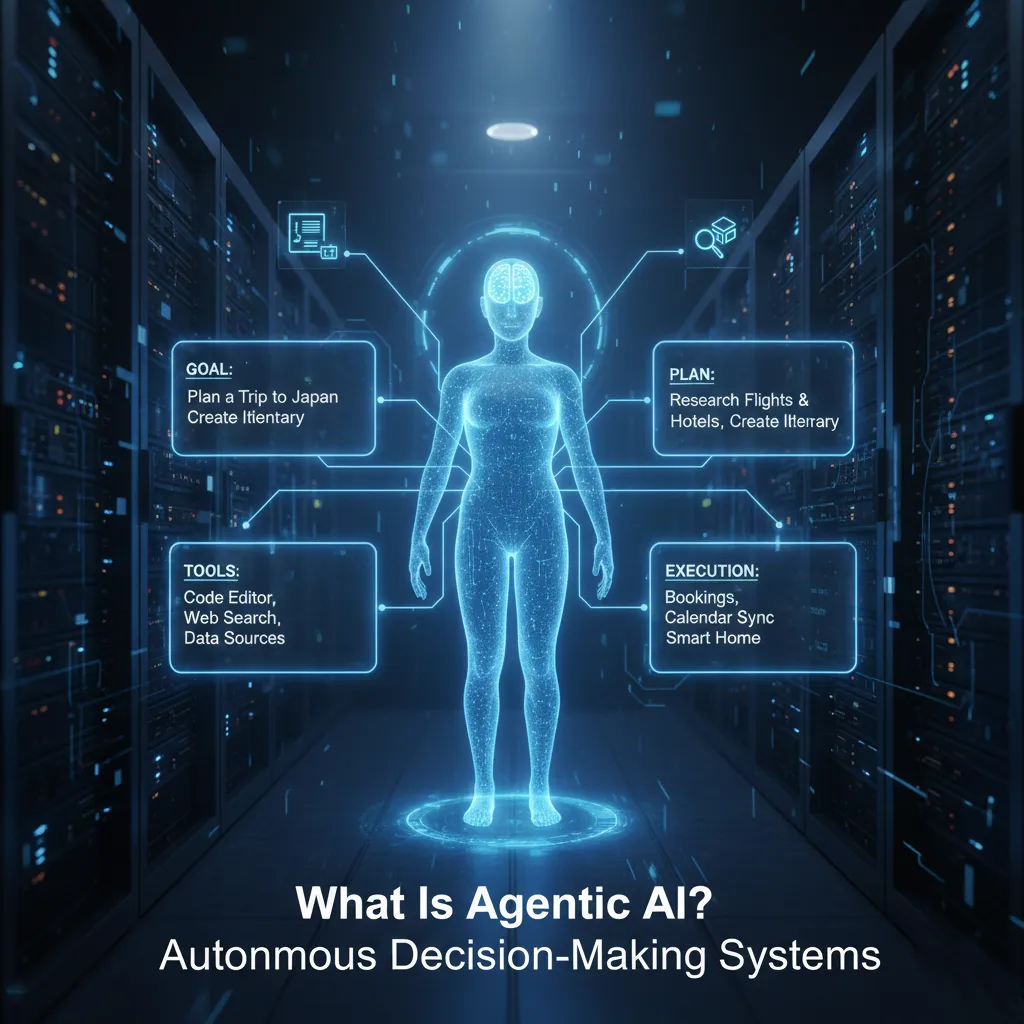
Agentic AI is a new breed of machines, able to operate independently of individuals. Agentic AI does not simply execute orders; Agentic AI defines its own goals and develops a detailed methodology to achieve them.
Unlike Non-agentic AI, Agentic AI can develop its own strategies to efficiently and effectively solve problems. Agentic AI will use tools such as the internet (for information gathering) and coding software (for development) to complete Assignments.
Comparison of Agentic AI's ability to perform similar tasks.
- Build Off of Previous Experience: Agentic AIs will use their prior experiences to make better decisions in the future.
- Reinforcement through Trial and Error: Agentic AI does not require a human to continually guide it. Agentic AIs can try many different approaches to achieving a specific goal until they are successful.
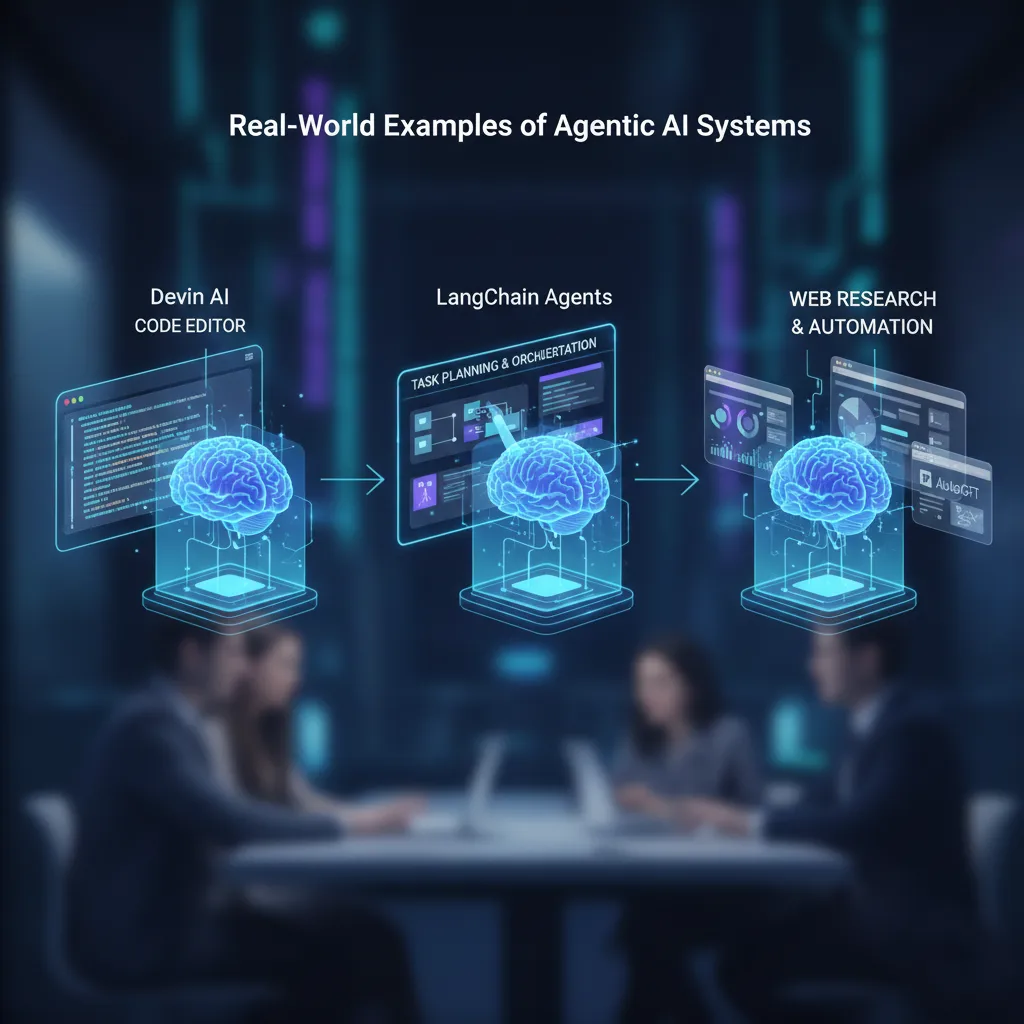
- AutoGPT: An automated AI that decomposes a complex objective into small, actionable steps, then follows these steps through completion independently.
- Cognition AI’s Devin: An automated AI program that creates software by planning what is required, creating the code, troubleshooting, and testing, all without direct human involvement.
- LangChain Agents: Automated AI models that serve as “cognitive resources” for other AIs to think, remember what they have previously done, and create the necessary tasks to achieve their goals.
Agentic AI vs Traditional AI: The Key Differences
| Aspect | Traditional AI | Agentic AI |
| Goal Orientation | Accomplishes tasks that are static and characterised by either the user or developer. | Presents self-directed goals and can break larger goals into achievable sub-goals. |
| Learning Scope | Acts in compliance with predetermined rules or using static training data. | Exhibits adaptive reasoning; can learn or adjust techniques while accomplishing a task. |
| Decision Making | Reactive — acts once input is provided, – cannot act unless prompted. | Proactive — takes initiative, plans, and acts independently to achieve a desired outcome. |
| Interaction Model | One-turn interaction — isolates task without recollecting past conversations. | Multi-turn interaction — remembers information across turns, allowing iterative conversations and improvement. |
| Memory Usage | Limited or no memory — all tasks are treated independently. | Employs short-term and long-term memory to learn from experiences. |
| Autonomy | Executes tasks only in constant assistance of tasks or to correct. | Functions independently and making decisions to learn without management. |
| Context Awareness | Functions in a limited context — does not think beyond the immediate input. | Has a greater awareness of the task, environment, and larger goals. |
| Tool Integration | Limited or no use of offline or online tools or an API. | Has the ability to leverage tools (online or offline), web access, and APIs to perform complex operations in a multi-step process. |
| Ability to Adapt | Not designed to react dynamically to new or shifting environments. | Extremely adaptable — changes in its approach based on environmental input or results. |
| Handling Errors | Fails, or requires human intervention or support when encountering an unscripted or unexpected condition. | Is able to self-correct or create a new plan when errors are encountered. |
| Example in Action | Spam filters, Siri, Alexa (basic), facial recognition chats, Netflix recommendations, other basic chatbots. | AutoGPT, Devin (AI Developer), LangChain agents, BabyAGI, personal AI assistants with planning capability. |
Working of Agentic AI
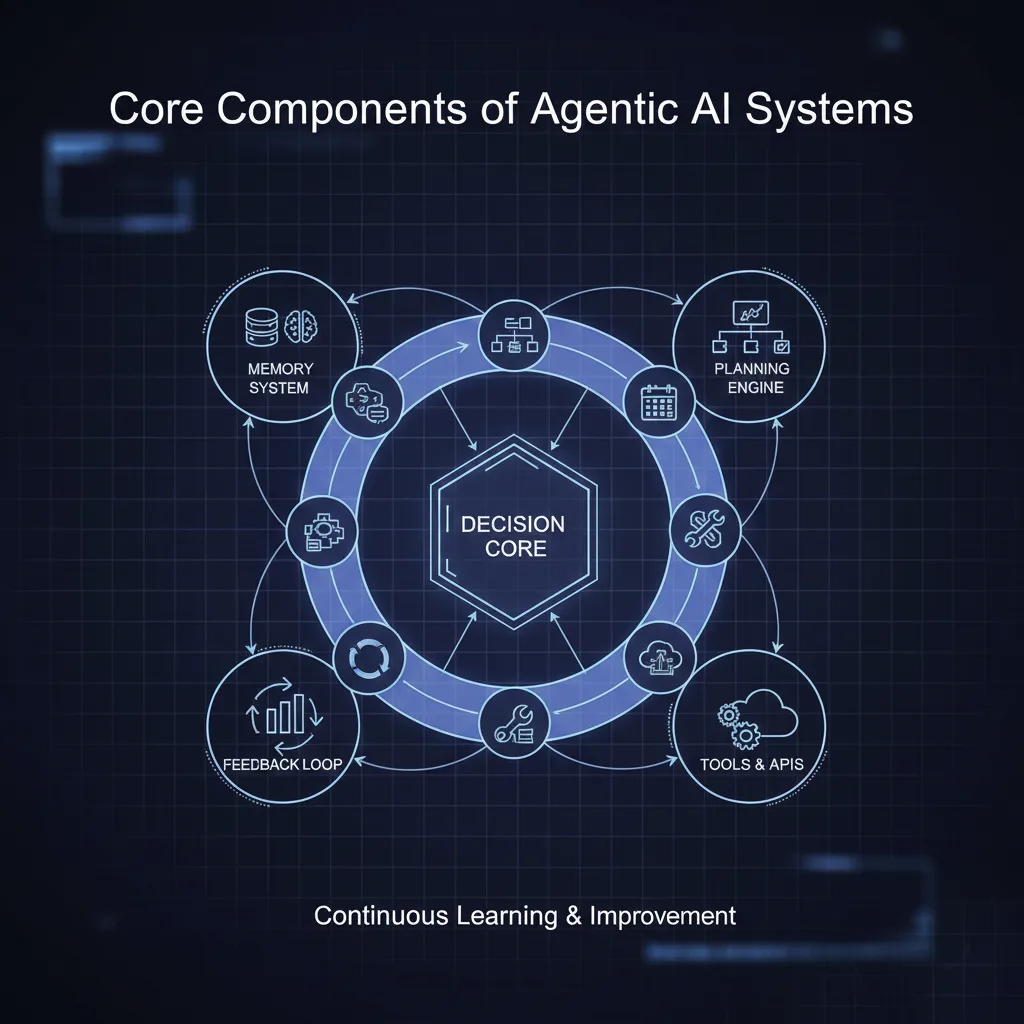
A range of highly advanced components underpin how agentic AIs operate autonomously and rationally. Some of these components include:
- Memory systems: They enable AIs to ‘remember’ actions taken and events experienced when completing tasks so they can modify their subsequent behavior(s) based on that past experience(s).
- Planning engines: They help AIs break complex tasks into simpler pieces, enabling them to carry out those pieces in whatever order makes the most logical sense.
- Tools: Tools provide AIs access to web scraping and APIs, enabling them to execute online searches, use external systems, and leverage internal toolsets to achieve a common end goal(s).
- Feedback loops: These loops enable AIs to evaluate the outcome of their computational work and make changes to their action(s) or change the method(s) used to carry out their computations based on the information acquired through feedback loops, ultimately increasing their performance(s).
By combining all these capabilities, agentic AIs function as co-worker-human collaborators, continuously thinking, trying multiple things, and learning.
Applications of Agentic AI in the Real World
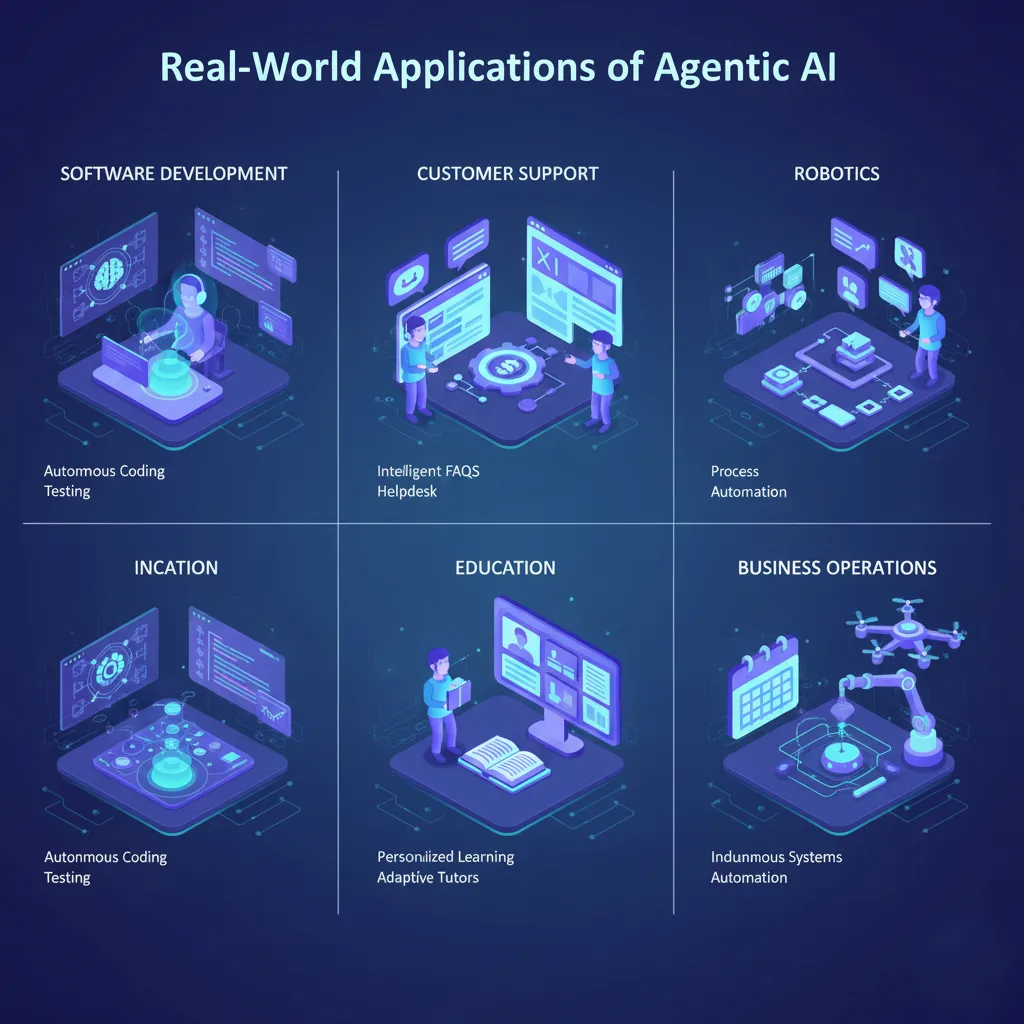
The potential of Agentic AI is already being seen across various domains:
- Software Development, through software such as GPT Engineer and Devin, will autonomously perform the full coding pipeline, with no human involvement at all.
- As for Customer Service, AI Agents are now able to answer customer inquiries and assist with concerns entirely without the need for any human involvement and continue to learn from their customer interactions in real-time.
- For Education, AI Tutors now adjust both their language and teaching methods according to the individual needs of each student, in addition to being able to track a student’s progress and performance.
- As for Business, with the evolution of agents that continue to autonomously locate the meeting times of their clients’ schedules, follow through on topical research and then create various written documentation as a result, AI Tools can continue to assist their human coworkers while not requiring any assistance of any sort.
- For Robotics, AI Tools can continue to control physical movement, locate potential obstacles and then decide how to avoid or get around them while travelling at any given speed and in any direction with the potential for real-time error detection and correction. These Four Examples demonstrate to the World that Agentic AI is about being of service to the user and enhancing the user’s ability to achieve more.
Constraints and Ethical Issues

With more freedom comes a larger set of responsibilities associated with safety, ethics, and governance in the use of Agentic AI systems. Many of the challenges associated with Agentic AI also overlap. For example:
- Over-Autonomous operation of AI – An AI system may misinterpret a user’s instructions, causing it to take unintended actions to accomplish those instructions.
- Bias / Privacy – AI systems are constantly learning and therefore must ensure that they are treating everyone fairly and protecting their private information.
- Responsibility – Determining who is liable for any damage or injury caused by an AI’s autonomous decision can be very challenging.
- Security concerns – The ability for a malicious person to exploit a vulnerability in an AI system through methods such as prompt injection can result in severe threats.
Developers have been utilizing a “human-in-the-loop” model with regard to these issues. In this model, humans retain ownership of the supervision and strategic direction of an AI while the AI provides intelligent assistance to the humans.
The Future for Agentic AI: What is Next

- Intelligent automation through integrated IoT and Robotics
- Systems designed to self-improve through feedback loops that improve reasoning processes.
- Frameworks for governance that enable the ethical and compassionate use of AI by having transparent processes.
The Importance of Learning Agentic AI Skills
Learning to be agentic in AI is coming to be viewed as a key skill for anyone in an artificial intelligence, machine learning, and data science role.
For students, acquiring and mastering the technical skills of Python, machine learning, advanced data systems, prompt engineering, and AI agents can lead to entry level opportunities in automation, robotics, advanced data systems, and more.
At Proleed, we have created the AI and Machine Learning Training Course to engage students in this future through hands-on projects and real-world applications that includes foundational knowledge of neural networks, LLMs (large language models), and agentic frameworks.
Learning these skills now, can help prepare students for being early leaders of our intelligent transformation for the future.
Conclusion
The transformation from Traditional AI to Agentic AI will most likely be one of the largest advancements in technology.
We are going from systems that responded to commands to systems that think, reason, plan, and act. As AI becomes even more “agentic”, it will also be introduced as a colleague and collaborator with potential to elevate human creativity and productivity.
For learners and practitioners of any domain, this is an excellent time to explore agentic systems, see how they operate, and begin building the competencies for the next wave of AI-based innovation.